


Introduction
Your dining room deserves to feel just as beautiful and welcoming as the rest of your home.
The right details can turn an ordinary table and empty walls into a space everyone loves gathering around.
These Dining Room Decor ideas will help you create a stylish, comfortable dining area without spending a fortune or replacing all your furniture. From elegant lighting and layered neutral textures to statement wall art, natural wood accents, and beautiful table settings, there are plenty of ways to refresh your space.
Whether you have a small apartment dining nook or a spacious family dining room, simple design choices can make a noticeable difference. I’ve noticed that thoughtful lighting, coordinated colors, and a few well-chosen accessories often make a room feel more complete than buying lots of new decorations.
Explore these inspiring ideas, discover styles that suit your home, and find practical ways to create a dining room you’ll enjoy every day.
1. Statement Dining Table
Image Description: Elegant dining room featuring a substantial natural oak dining table with sculptural legs, cream upholstered chairs, warm beige walls, a large neutral abstract artwork, and a ceramic centerpiece filled with white flowers. Soft daylight streams through sheer curtains, highlighting wood grain, linen textures, and understated contemporary styling. Wide-angle interior photography.
A statement dining table can make the entire room feel thoughtfully designed, even when the surrounding furniture is simple. Choose a solid wood table with distinctive grain, curved edges, or architectural legs. Natural oak and walnut bring warmth, while a dark wood finish creates a more dramatic focal point.
Keep the surrounding pieces understated so the table remains the star. Pair it with comfortable upholstered chairs, a simple ceramic vase, and a neutral rug that defines the dining area. In my experience, investing in one substantial furniture piece often creates a more polished result than filling the room with multiple decorative accessories.
2. Layered Neutral Textures
Image Description: Cozy modern dining room in warm ivory, oatmeal, taupe, and soft brown, featuring a light oak dining table, cream linen chairs, a textured beige rug, woven placemats, and handmade ceramic dishes. Natural window light creates gentle shadows, while linen curtains and plaster walls add depth. Eye-level interior photography.
- Start with a soft base. Choose cream, ivory, or warm beige for the walls, curtains, or largest furniture pieces.
- Mix natural materials. Combine a wooden table with linen upholstery, woven placemats, and stoneware dishes.
- Vary the textures. Pair a chunky rug with smooth ceramics and softly folded table linens.
- Introduce subtle contrast. Add dark brown candlesticks or black picture frames to prevent the palette from looking flat.
- Keep patterns restrained. Choose one understated stripe or organic print rather than mixing several competing designs.
Layered neutrals make a dining space feel calm without looking plain. The secret is combining materials that respond differently to light, such as matte ceramics, textured fabrics, and gently polished wood. For budget-friendly results, change the placemats, table runner, and cushion covers before replacing larger furniture pieces.
3. Oversized Pendant Lighting
Image Description: Sophisticated dining room with a large sculptural pendant light centered above a rectangular walnut dining table, surrounded by cream upholstered chairs. Warm white lighting glows against beige walls, with a neutral rug, delicate branches in a stone vase, and sheer curtains. Balanced overhead composition showing the light fixture and complete dining arrangement.
Quick Tip:
Choose a pendant that feels proportionate to your dining table rather than selecting the smallest fixture available. Hang it low enough to create an intimate atmosphere without blocking anyone’s view across the table. Always follow the fixture manufacturer’s installation instructions and have electrical work completed by a qualified professional when needed.
Lighting can change the entire mood of a dining room, especially after sunset. A sculptural pendant provides a clear focal point while making everyday meals feel more considered. Choose woven shades for relaxed interiors, opal glass for a softer glow, or a metal dome for modern contrast. A dimmer switch adds flexibility for family dinners, quiet breakfasts, and special gatherings.
4. Elegant Wall Molding
Image Description: Refined dining room with symmetrical cream wall molding, a medium-toned oak dining table, beige upholstered chairs, and a brass chandelier. Soft natural daylight falls across warm ivory walls, highlighting the architectural panel details. A neutral landscape painting, subtle linen curtains, and pale wood flooring complete the timeless, elegant interior. Wide-angle photography.
BEFORE
Plain dining room walls can make even attractive furniture feel disconnected. Without architectural details or a clear focal point, the space may look unfinished, especially when the walls are completely bare.
AFTER
Slim decorative molding creates structure and visual depth without taking up floor space. Painted in the same color as the walls, it gives the room a sophisticated, custom-designed appearance.
For a balanced finish, measure the wall carefully and plan evenly spaced rectangular panels before installing anything. Keep the molding proportional to the room, with wider panels on larger walls and simpler arrangements in compact dining areas.
Choose a single oversized artwork or a pair of matching frames to complement the panels. This approach works particularly well in traditional, transitional, and modern classic interiors. For renters, removable molding alternatives can provide a similar decorative effect without permanent alterations.
5. Fresh Floral Centerpiece
Image Description: Bright dining room with a natural oak table topped by a low arrangement of white tulips, delicate cream roses, and soft greenery in a handmade ivory ceramic vase. Neutral linen placemats, simple stoneware plates, and beige upholstered chairs complement the arrangement. Gentle morning sunlight highlights the fresh flowers and natural textures.
- Choose a low vase. Select a ceramic or glass vessel that keeps the arrangement below seated eye level.
- Select seasonal flowers. Use tulips in spring, sunflowers in summer, or warm-toned chrysanthemums in autumn.
- Create natural movement. Combine flowers of different heights with a few delicate stems for a relaxed arrangement.
- Keep the surrounding table simple. Add neutral placemats and a small stack of coordinating plates without crowding the centerpiece.
Fresh flowers bring color and life to a dining table without requiring a complete room makeover. For a more affordable alternative, display a few stems from your garden or arrange seasonal branches in a tall vase. Replace the water regularly, trim the stems, and keep the arrangement away from direct heat to help the flowers last longer.
6. Statement Dining Room Rug
Image Description: Stylish dining room featuring a large vintage-inspired rug in muted rust, taupe, ivory, and charcoal beneath a dark oak dining table. Cream upholstered chairs, a simple ceramic vase, and a brass pendant light complete the setting. Soft daylight reveals the rug’s intricate pattern and woven texture against pale wood flooring.
| Design choice | Option A: Small rug | Option B: Properly sized rug |
|---|---|---|
| Chair placement | Chair legs catch on the edge | Chairs remain on the rug when pulled out |
| Visual balance | Dining set looks disconnected | Furniture feels grounded |
| Cleaning | Less area to maintain | Requires more regular vacuuming |
| Best material | Thin decorative weave | Durable, low-pile construction |
A well-sized rug helps define the dining zone and introduces pattern, warmth, and texture. Ideally, leave enough room for chairs to slide backward without catching the rug’s edge, often around 24 to 30 inches beyond the table on each side. Choose a low-pile, easy-to-clean material for everyday family meals, especially if spills are common.
7. Oversized Wall Art
Image Description: Contemporary dining room with one oversized abstract canvas in warm beige, ivory, terracotta, and charcoal above a natural walnut dining table. Cream upholstered chairs, a sculptural ceramic vase, and a slim brass chandelier complete the scene. Soft afternoon sunlight illuminates the textured artwork and warm plaster walls, creating a sophisticated editorial interior photograph.
DO
- Choose artwork approximately two-thirds the width of the dining table or sideboard beneath it.
- Hang the center of the artwork near seated eye level when the wall is viewed from the dining area.
- Repeat one or two colors from the artwork in your cushions, ceramics, or table linens.
- Use a simple wood or black frame to give the piece a finished appearance.
DON’T
- Choose artwork so small that it disappears against a large empty wall.
- Mix several bold prints that compete for attention.
- Hang heavy frames without suitable wall anchors.
- Leave excessive space between the artwork and the furniture below it.
Oversized artwork gives a dining room an immediate focal point without requiring expensive renovations. Abstract paintings, large botanical prints, and textured neutral canvases work particularly well above a sideboard or dining table. For a budget-friendly approach, choose one large print with a simple frame rather than purchasing several smaller pieces that may look disconnected.
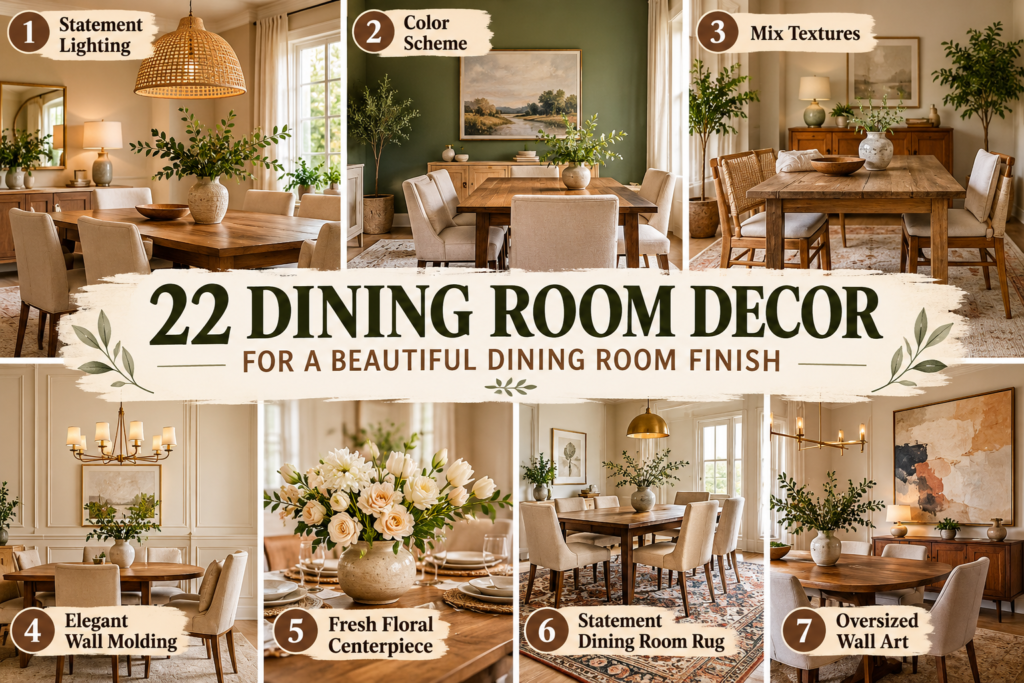
8. Warm Wood Accents
Image Description: Inviting dining room featuring a medium walnut dining table, light oak sideboard, natural wood picture frames, woven pendant lighting, and cream linen chairs. Warm beige walls and pale oak flooring complement the layered timber finishes. Soft morning sunlight highlights the wood grain, while a ceramic bowl and dried branches add understated natural styling.
Cost: Low to moderate, depending on existing furniture and accessories.
Time: One afternoon for simple styling changes.
Skill Level: Beginner-friendly.
Best For: Neutral, Scandinavian, rustic, and modern organic interiors.
Result: A warmer room with natural depth and coordinated finishes.
Wood accents can make a dining space feel more welcoming, particularly when the main palette includes white, beige, or gray. Start with the largest existing wood piece, then introduce complementary finishes through a sideboard, serving bowls, frames, or chair legs. Different wood tones can work beautifully together when their undertones feel compatible and the overall palette stays balanced.
9. Floor-Length Curtains
Image Description: Elegant dining room with floor-length ivory linen curtains framing tall windows beside a rectangular oak dining table. Soft beige upholstered chairs, a muted patterned rug, and a simple brass pendant complement the airy setting. Natural daylight filters through the fabric, creating delicate shadows across warm cream walls and pale wood flooring. Wide-angle interior photography.
Long curtains can make a dining room feel taller, softer, and more finished without changing its furniture. Hang the curtain rod several inches above the window frame, extending it beyond the sides so the fabric frames the window instead of blocking natural light.
Choose lightweight linen or cotton for an airy daytime look, or lined curtains when you need greater privacy. In a small dining room, warm ivory and soft taupe keep the space visually open. Measure carefully before purchasing, and allow the fabric to just touch the floor for a neat, tailored finish.
10. Stylish Dining Room Sideboard
Image Description: Modern dining room featuring a low walnut sideboard against a warm ivory wall, styled with a sculptural cream ceramic lamp, stacked art books, a rounded vase of delicate branches, and framed abstract artwork. A natural oak dining table and beige upholstered chairs sit nearby. Soft window light reveals rich wood grain and linen textures.
- Choose functional storage: Select a sideboard with closed cabinets for table linens, serving dishes, and dining accessories.
- Create a balanced display: Place a table lamp at one end and a ceramic vase or framed artwork at the other.
- Layer different heights: Combine a tall vase, medium-sized frame, and low decorative bowl for visual interest.
- Keep the surface usable: Leave enough empty space for serving platters, drinks, or a temporary buffet during gatherings.
A sideboard makes dining room decor more practical while providing another surface for decorative details. In a compact room, choose a slim design that fits against the wall without obstructing chair movement or walkways. Match its finish to the dining table for a coordinated appearance, or introduce a contrasting wood tone to add depth. The result is storage that looks intentional rather than purely functional.
11. Layered Candlelight
Image Description: Intimate dining room with a natural walnut table arranged with ivory taper candles, small glass votives, linen napkins, and understated ceramic dinnerware. Cream upholstered chairs surround the table beneath a warm brass chandelier. Muted taupe walls, subtle floral branches, and gentle evening lighting create a refined atmosphere with soft shadows and golden highlights.
Quick Tip:
Combine candles of different heights, but keep their holders within a consistent color palette. Use sturdy, heat-resistant holders and keep open flames away from curtains, flowers, and other flammable materials.
Soft candlelight creates a relaxed atmosphere that overhead lighting alone may not provide. Arrange three taper candles along the center of the table, then add a few small votives for a gentle glow. For everyday meals, battery-operated candles offer a convenient alternative, especially in busy households with children or pets. Keep the arrangement low and narrow enough to leave room for dishes and conversation.
12. Two-Tone Dining Chairs
Image Description: Contemporary dining room with a warm oak rectangular table surrounded by a combination of cream upholstered end chairs and natural wood side chairs with woven seats. A muted beige rug, sculptural pendant, and simple ceramic centerpiece complete the design. Soft daylight highlights contrasting materials against warm white walls and pale timber flooring.
BEFORE
A matching dining set can sometimes feel flat, especially when the table, chairs, and surrounding accessories share nearly identical finishes. The room may lack contrast, even when every piece is attractive on its own.
AFTER
Mixing two complementary chair styles introduces texture and personality while keeping the dining arrangement cohesive. Upholstered chairs at the ends of the table create a more formal appearance, while simple wooden or woven chairs along the sides maintain a relaxed feel.
Start with the table’s finish and choose chairs that complement its undertones. Repeat one material or color elsewhere in the room so the combination feels deliberate. If you are working with existing furniture, replace just the two end chairs first. This small adjustment can create a noticeable change without the cost of purchasing a complete new set.
13. Decorative Dining Room Mirror
Image Description: Elegant dining room with a large rounded rectangular mirror in a slim antique brass frame mounted above a walnut sideboard. A cream dining table, upholstered beige chairs, a ceramic vase, and delicate branches complete the setting. Natural daylight reflects softly across warm ivory walls, creating depth and brightness with refined contemporary styling.
- Select the right shape. Choose a round mirror for softer lines or a rectangular mirror for a more structured appearance.
- Position it thoughtfully. Hang the mirror above a sideboard or on a wall where it can reflect natural light.
- Coordinate the frame. Match brass finishes with warm lighting or choose black for a more contemporary look.
- Check the reflection. Make sure the mirror reflects an attractive feature, such as a window, artwork, or chandelier.
A well-placed mirror can make a dining room feel brighter and more spacious without adding bulky furniture. For the best result, consider what the mirror reflects before deciding where to hang it. Avoid positioning it where it creates distracting glare from overhead lights. In a narrow dining area, a generously sized mirror can also provide visual depth while complementing the room’s existing finishes.
14. Natural Linen Table Runner
Image Description: Warm minimalist dining room with a natural oak table dressed in a softly rumpled oatmeal linen runner. Cream stoneware plates, textured beige napkins, a low ivory ceramic vase, and delicate dried branches create an understated tablescape. Soft morning sunlight emphasizes the fabric weave, wood grain, and warm neutral palette against pale plaster walls.
| Design choice | Option A: Formal runner | Option B: Relaxed linen runner |
|---|---|---|
| Fabric | Smooth satin or polyester | Textured linen or cotton |
| Styling | Crisp, symmetrical arrangement | Soft folds and natural draping |
| Color palette | Bold or high-contrast shades | Ivory, oatmeal, or muted taupe |
| Maintenance | Depends on fabric care | Check washing instructions for shrinkage |
A linen runner adds texture to the table while allowing the wood grain to remain visible. Choose a length that extends beyond both ends without interfering with nearby chairs, and coordinate it with placemats or napkins for a connected look. For everyday dining, washable fabric is a practical choice. A simple runner can also refresh an existing table when replacing the furniture is not within your budget.
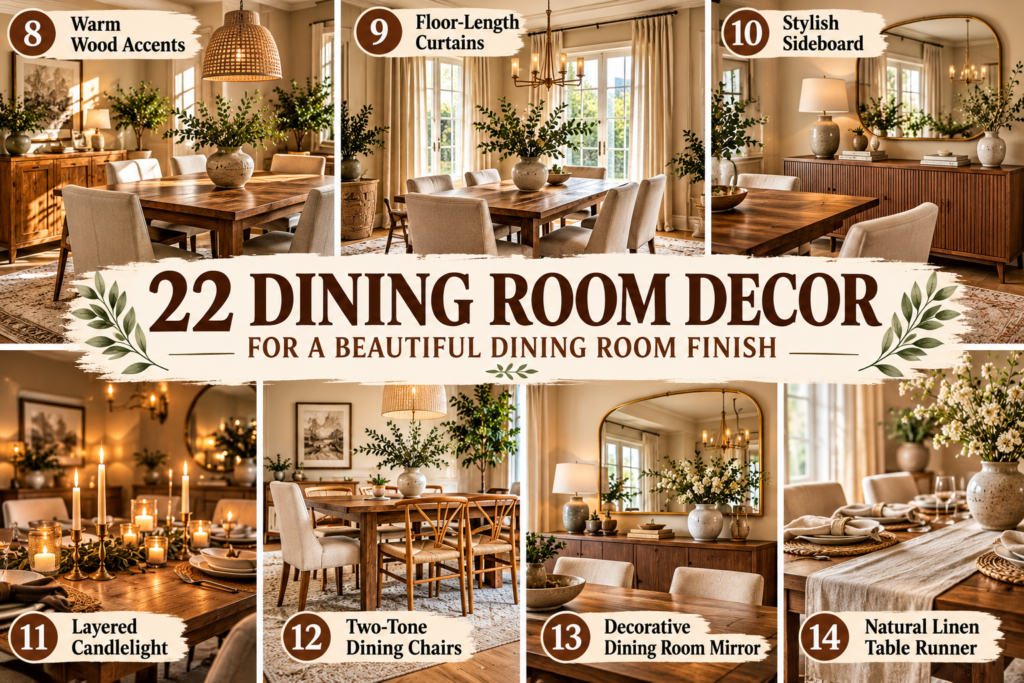
15. Built-In Dining Nook
Image Description: Charming dining nook with a built-in L-shaped bench upholstered in warm cream fabric, a compact round oak table, and two slim wooden chairs. Neutral cushions, a small brass pendant, and framed botanical artwork complement soft beige walls. Natural window light brightens the cozy corner, highlighting textured upholstery, pale wood flooring, and simple Scandinavian styling.
DO
- Measure the available corner before selecting the table and bench dimensions.
- Include drawers or lift-up storage beneath the bench where practical.
- Choose wipeable upholstery or removable cushion covers for easier maintenance.
- Add a pendant or wall sconce to create a defined dining zone.
DON’T
- Make the bench so deep that diners cannot sit comfortably at the table.
- Block nearby doors, windows, or essential walking routes.
- Choose bulky chairs that make entering and leaving the nook difficult.
- Overload the seating with oversized cushions that reduce usable space.
A built-in dining nook makes a compact room more functional by turning an unused corner into a dedicated eating area. Pairing a bench with a round pedestal table can improve movement and provide flexible seating for everyday meals. If permanent carpentry is not suitable, a freestanding bench and a few fitted cushions can achieve a similar effect with less commitment.
16. Sculptural Ceramic Accessories
Image Description: Refined dining room with a light oak table displaying sculptural ivory ceramic vases, a matte sand-colored bowl, and handcrafted stoneware plates. Beige upholstered chairs, a textured neutral rug, and a softly glowing pendant complete the setting. Natural daylight highlights the ceramics’ irregular shapes and matte finishes against warm cream walls and subtle wood textures.
Cost: Low to moderate, depending on the size and craftsmanship of the pieces.
Time: 20 to 30 minutes for styling an existing table or sideboard.
Skill Level: Beginner-friendly.
Best For: Modern organic, minimalist, Scandinavian, and contemporary dining rooms.
Result: A thoughtful display with texture, shape, and understated character.
Ceramic accessories add visual interest without making the dining table feel crowded. Choose two or three pieces with different heights and shapes, such as a rounded vase, a shallow bowl, and a narrow vessel. Keep their colors within a related palette so the arrangement feels cohesive. Handmade finishes can introduce subtle variation, making even a simple neutral dining space feel more personal.
17. Bold Accent Wall
Image Description: Contemporary dining room featuring a deep navy accent wall behind a natural walnut dining table, cream upholstered chairs, and a brushed brass chandelier. A large abstract artwork, ivory ceramic centerpiece, and pale neutral rug balance the rich wall color. Soft natural window light and warm evening illumination highlight the contrast and sophisticated textures.
A bold accent wall gives a dining room a distinct focal point without requiring a complete redesign. Deep navy, warm terracotta, charcoal, and muted burgundy can all work beautifully, depending on the furniture and available light. Before painting, test sample colors on different parts of the wall and observe them throughout the day.
Keep nearby furniture and accessories relatively simple so the wall remains the main feature. For example, navy pairs well with walnut and brass, while terracotta complements natural oak and cream upholstery. If painting is not practical, removable wallpaper can introduce a similar effect. The key is choosing a shade that complements the room rather than making the space feel visually crowded.
18. Coordinated Table Settings
Image Description: Beautifully arranged dining table with ivory stoneware plates, oatmeal linen napkins, brushed gold cutlery, clear drinking glasses, and simple cream ceramic bowls. A natural oak table sits beneath a warm brass pendant, surrounded by beige upholstered chairs. Soft daylight reveals delicate fabric folds and subtle material contrasts in a welcoming contemporary dining room.
| Design element | Option A: Mismatched setting | Option B: Coordinated setting |
|---|---|---|
| Dinnerware | Multiple unrelated patterns | Two complementary plate styles |
| Napkins | Mixed colors without a plan | Repeated neutral or accent shade |
| Cutlery | Inconsistent finishes | One consistent metal finish |
| Centerpiece | Crowded decorative objects | One low, simple arrangement |
Coordinated table settings make everyday meals feel more considered, even when the dinnerware is inexpensive. Start with neutral plates, then add texture through cloth napkins, woven placemats, or a contrasting serving bowl. You do not need a complete matching set. Repeating just two colors and one material is often enough to create a polished table that remains practical for daily use.
19. Elegant Floating Shelves
Image Description: Modern dining room with two slim natural oak floating shelves mounted above a warm beige sideboard. Cream ceramic vases, neatly stacked neutral dinnerware, framed minimalist artwork, and small decorative bowls create a balanced display. Soft daylight illuminates the textured ivory walls, while a walnut dining table and upholstered chairs add warmth and understated contemporary elegance.
DO
- Install shelves on a wall that does not interfere with doors or dining chairs.
- Arrange ceramic pieces, framed prints, and small serving bowls at varied heights.
- Leave empty space between objects to keep the display visually balanced.
- Secure shelves with hardware suited to the wall type and intended load.
DON’T
- Overload shelves with heavy dishes beyond their rated capacity.
- Place fragile decorations where diners might knock them while moving chairs.
- Mix too many colors and patterns in a small display.
- Position shelves so low that they obstruct the dining area.
Floating shelves provide useful display space when a dining room lacks room for additional furniture. Style them with a restrained mix of decorative objects and practical pieces you already own. Matching the shelf finish to the dining table or sideboard helps tie the room together. For a clean result, arrange larger objects first, then fill only a few gaps with smaller accessories.
20. Round Dining Table Layout
Image Description: Airy dining room centered around a round natural oak pedestal table with four cream upholstered chairs. A circular textured beige rug, sculptural pendant, and low ceramic centerpiece reinforce the rounded shapes. Warm ivory walls, pale wood flooring, and soft window light create an inviting contemporary interior with balanced proportions and clear walking space.
Cost: Moderate, depending on table size and material.
Time: One afternoon to rearrange furniture and adjust the layout.
Skill Level: Beginner-friendly.
Best For: Small dining rooms, breakfast corners, and open-plan apartments.
Result: A softer furniture arrangement with easier movement around the table.
A round dining table can make a compact dining area feel less crowded because it eliminates sharp corners and often improves circulation. A pedestal base is especially useful when you want to fit extra chairs without table legs getting in the way. Measure the room before buying, and leave enough clearance for chairs to pull out comfortably. Pair the table with a circular rug or rounded pendant to reinforce the shape without making the room feel overly coordinated.
21. Natural Greenery Display
Image Description: Fresh dining room featuring a walnut table with a low arrangement of leafy branches in a matte ivory vase, accompanied by small potted plants on a light oak sideboard. Cream linen chairs, neutral stoneware, and soft beige walls complement the natural foliage. Gentle daylight streams through sheer curtains, highlighting organic textures and a relaxed modern aesthetic.
Quick Tip:
Choose greenery according to the natural light available in your dining room. Rotate plants toward the window when needed, and use a stable, waterproof tray beneath pots to protect wooden surfaces.
Natural greenery adds a fresh, organic element to a dining space without requiring new furniture or expensive artwork. A small potted plant on a sideboard or a few leafy branches in a ceramic vase can soften straight furniture lines and bring subtle color into a neutral room. Keep taller arrangements away from diners’ sightlines, and select non-toxic plants if children or pets may reach them.
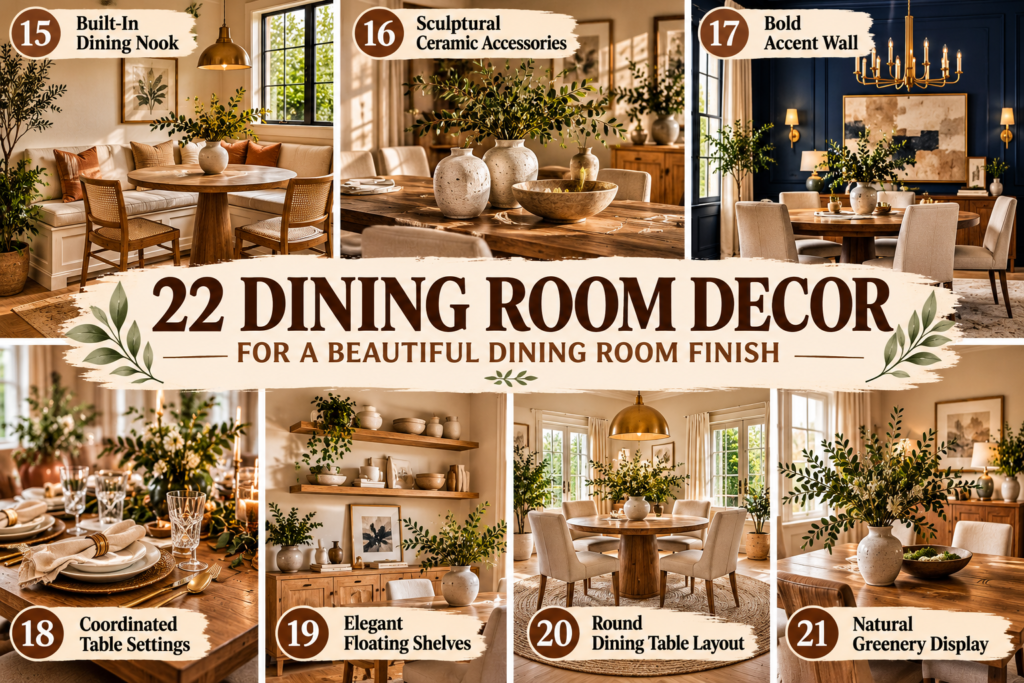
22. Statement Dining Room Chandelier
Image Description: Sophisticated dining room featuring a sculptural brass chandelier suspended above a long walnut dining table with cream upholstered chairs. Warm ivory walls, a neutral textured rug, and a low ceramic centerpiece create a balanced setting. Soft daylight blends with the chandelier’s golden glow, highlighting polished metal, natural wood grain, and elegant contemporary styling.
A statement chandelier can tie the entire dining room together by drawing attention to the table and adding a distinctive design feature. Choose a sculptural brass fixture for warmth, a black geometric design for contrast, or a frosted glass chandelier for a softer appearance. The fixture should complement the table’s proportions without overwhelming the surrounding furniture.
Before purchasing, check the ceiling height, table dimensions, and fixture specifications. Center the chandelier over the dining table rather than the entire room, and follow the manufacturer’s recommended hanging height. A dimmable light with a warm color temperature can create a comfortable atmosphere for evening meals while providing sufficient illumination for everyday dining.
Conclusion
Creating a beautiful dining room doesn’t require a complete makeover or an expensive furniture budget. Sometimes, a new centerpiece, elegant curtains, a statement light fixture, or a carefully chosen rug is all you need to refresh the space. These Dining Room Decor ideas offer inspiration for different styles, room sizes, and budgets, helping you create a setting that feels personal and welcoming.
Leave a Reply