

Introduction
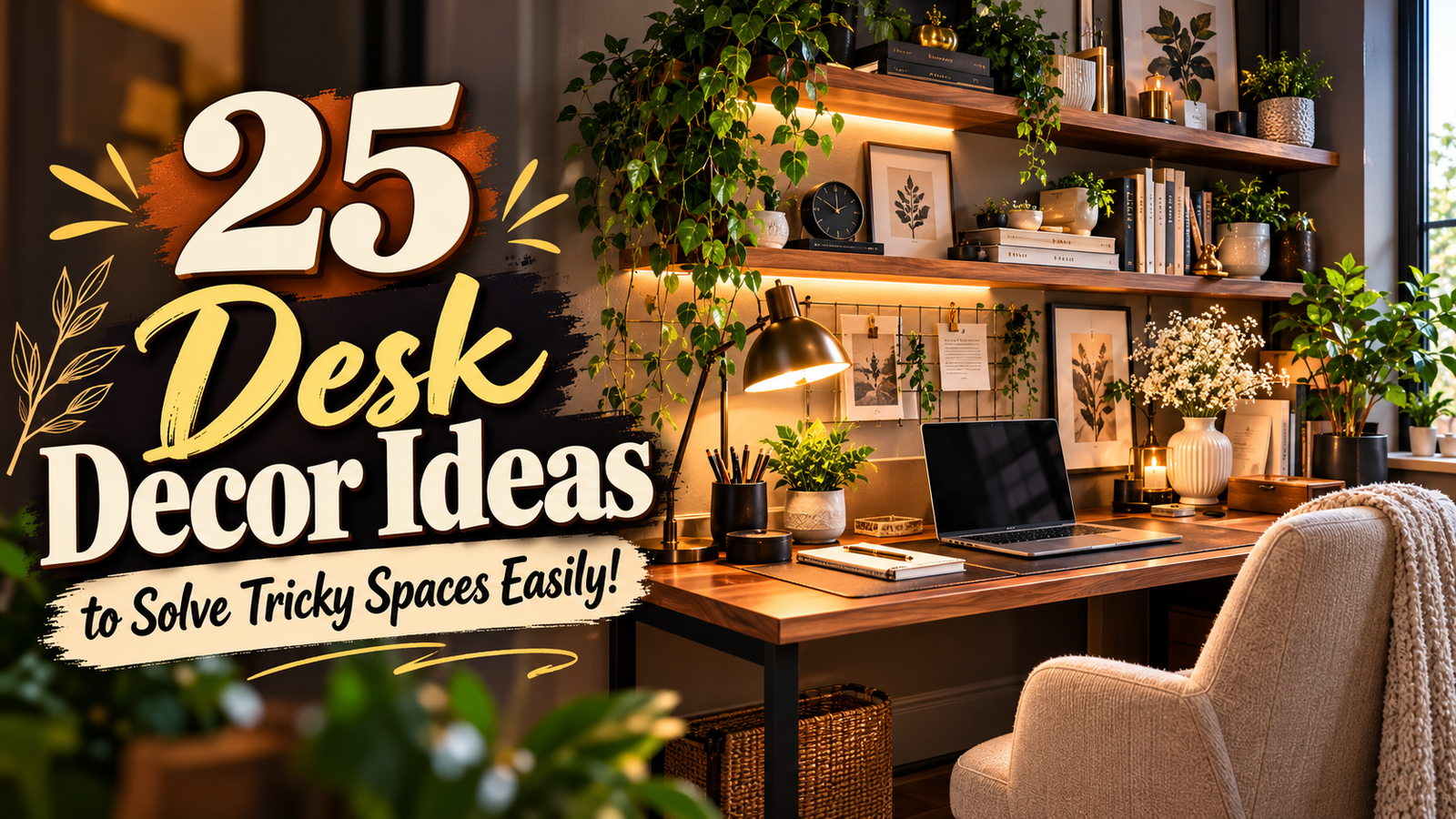
A small desk shouldn’t mean sacrificing style, comfort, or organization. Even the trickiest corner can become a workspace you love!
These Desk Decor Ideas will help you make the most of awkward corners, narrow bedrooms, shared living spaces, and tiny home offices. Whether you’re working with a floating desk, a small bedroom workstation, or a crowded tabletop, the right arrangement can make your space feel more organized and inviting.
The secret isn’t buying lots of new decorations. It’s choosing practical furniture, smart storage, thoughtful lighting, and a few personal touches that work together. I’ve noticed that clearing unnecessary items and using vertical wall space can make even a cramped desk feel more open.
From floating shelves and hidden storage to cozy lighting and clever laptop setups, these ideas offer practical inspiration for different layouts and budgets. Explore the options, choose the ones that suit your needs, and create a workspace that feels comfortable, functional, and uniquely yours.
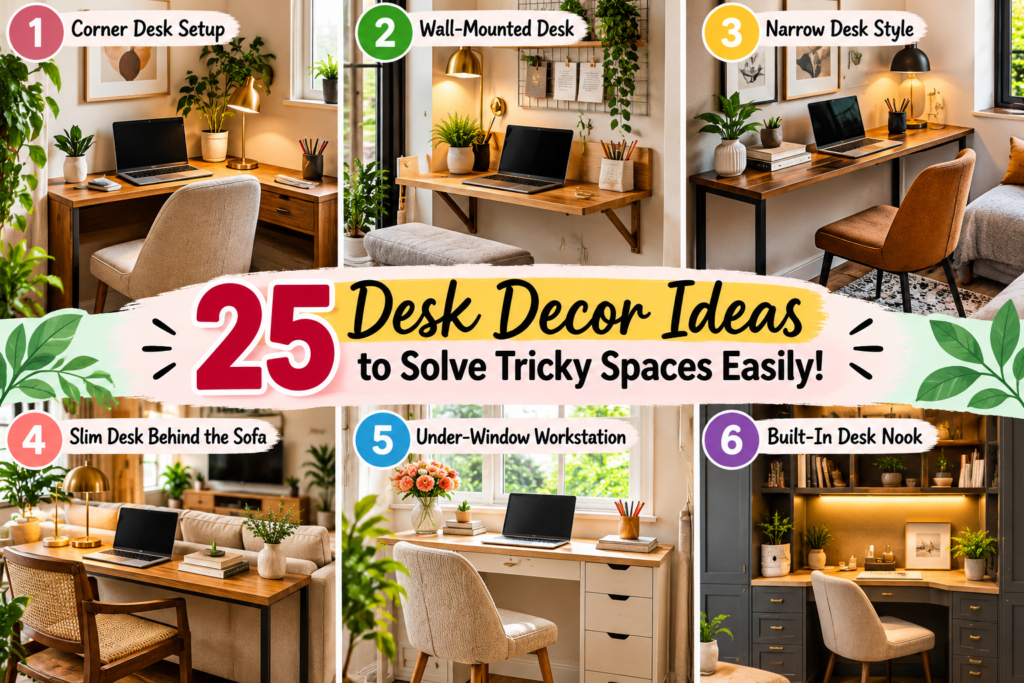
1. Floating Wall Desk
Image Description: A compact floating desk mounted on a warm beige wall, featuring a slim walnut wood surface, a cream ceramic pencil holder, a small brass desk lamp, neatly stacked notebooks, and a tiny framed abstract print. Soft natural window light, subtle shadows, neutral textures, minimalist Scandinavian styling, front three-quarter camera angle.
A floating workstation frees up valuable floor space without sacrificing style. The wall-mounted surface creates a clean, open look, making it especially useful in narrow bedrooms, studio apartments, or awkward corners where traditional furniture feels bulky. Choose a finish that complements your existing furniture for a cohesive appearance.
For everyday practicality, mount the desk at a comfortable working height and secure it into suitable wall supports. Keep frequently used supplies in a small organizer, and store less essential items elsewhere. A slim floating shelf above the desk can hold books and decor while leaving the work surface available for your laptop.
2. Vertical Storage Shelves
Image Description: A narrow home office corner with three vertical oak shelves above a compact white desk, styled with cream storage boxes, upright books, a small terracotta planter, a round clock, and framed artwork. Warm daylight, soft beige walls, natural wood grain, tidy modern decor, and a straight-on interior photography perspective.
When desk space is limited, the walls can do much of the organizational work. Vertical shelving draws the eye upward and provides storage for books, stationery, and decorative accents without crowding your working area. This setup works particularly well beside a bed, in a small apartment, or under a staircase.
- Keep daily essentials low: Place notebooks, chargers, and frequently used supplies on the lowest shelf.
- Display decor sparingly: Combine a few books with one or two decorative objects.
- Use matching containers: Neutral storage boxes create a calmer appearance and conceal loose supplies.
- Vary object heights: Mix upright books, horizontal stacks, and small accessories for visual balance.
- Secure every shelf: Use appropriate wall fixings and avoid overloading shelves above your workspace.
For a polished result, leave some empty space between objects instead of filling every shelf. I’ve noticed that a simple arrangement often feels more spacious and makes essentials easier to find. Renters can also consider sturdy freestanding ladder shelves when drilling into walls isn’t practical.
3. Corner Desk Styling
Image Description: A small L-shaped corner desk in a softly lit bedroom, featuring a rich walnut desktop, a charcoal desk mat, a compact black task lamp, cream notebooks, a small ceramic vase, and a pinboard above. Warm taupe walls, textured linen curtains, gentle afternoon sunlight, modern cozy styling, and an angled overhead view.
Quick Tip:
Treat the corner as two separate zones: one for working and one for storage or decoration. Keep the main working area closest to your chair, and place decorative objects along the outer edge. A compact lamp with an adjustable arm provides focused light without taking up much surface space.
Awkward corners often become useful workstations with the right arrangement. Position your monitor or laptop where you can sit comfortably without twisting your shoulders, then reserve the shorter side of the desk for a notebook, charging station, or small storage tray. A coordinated desk mat helps define the working zone and keeps loose items visually contained.
4. Slim Desk Behind the Sofa
Image Description: A narrow walnut console desk positioned directly behind a modern beige sofa in a small living room, styled with a slim black laptop, a brass table lamp, cream stationery, and a small ceramic vase. Warm ambient lighting, soft natural daylight, textured neutral fabrics, light oak flooring, contemporary minimalist decor, wide-angle interior photography.
BEFORE
An empty strip behind the sofa becomes wasted space, while a separate office desk makes the living room feel cramped. Work essentials often end up scattered across the coffee table.
AFTER
A slim console-style desk creates a discreet workstation without taking up additional room. The sofa naturally separates the working area from the relaxation zone.
Choose a desk that leaves enough clearance for walking and sitting comfortably. Keep accessories minimal, route charging cables behind the furniture, and select a chair that can tuck away when work is finished. This arrangement is especially useful in studio apartments and open-plan living rooms where every square foot matters.
5. Under-Window Workstation
Image Description: A compact white desk fitted neatly beneath a large bedroom window, with a pale oak desktop, a slim laptop, a cream ceramic pen cup, stacked notebooks, and a small dusty rose flower arrangement. Soft morning sunlight, sheer ivory curtains, warm beige walls, delicate linen textures, airy Scandinavian styling, eye-level camera angle.
- Measure the window area. Check the available width, depth, and sill height before choosing a desk.
- Select a low-profile design. Choose a desk that fits beneath the window without blocking access or interfering with curtains.
- Position your screen carefully. Angle the monitor to reduce distracting reflections and glare.
- Add compact accessories. Use a small lamp, a pencil holder, and a shallow tray for everyday essentials.
Natural light can make a small workspace feel more open and pleasant. Keep the window area uncluttered so daylight reaches the desk, and use adjustable blinds if direct sun makes screen viewing difficult. A chair with suitable back support completes the setup without requiring a large dedicated office.
6. Built-In Desk Nook
Image Description: A custom-built desk tucked into a recessed wall alcove, featuring deep espresso cabinetry, a warm oak worktop, matte black drawer pulls, integrated shelves, cream storage boxes, and a small brass wall sconce. Moody warm lighting, textured taupe walls, carefully organized stationery, sophisticated contemporary styling, straight-on architectural interior photograph.
| Design Detail | Option A: Basic Desk | Option B: Built-In Nook |
|---|---|---|
| Space usage | May leave awkward gaps | Fits the available recess |
| Storage | Often needs separate units | Can include integrated drawers |
| Appearance | Looks like standalone furniture | Creates a cohesive finish |
| Budget | Usually lower upfront cost | Often costs more to install |
An unused alcove can become a functional work zone with a fitted countertop and thoughtful storage. Measure the recess carefully, including skirting boards and nearby outlets, before planning the layout. If custom cabinetry exceeds your budget, install a cut-to-size worktop with compact drawer units and matching shelves for a similar built-in appearance.
7. Minimalist Desk Accessories
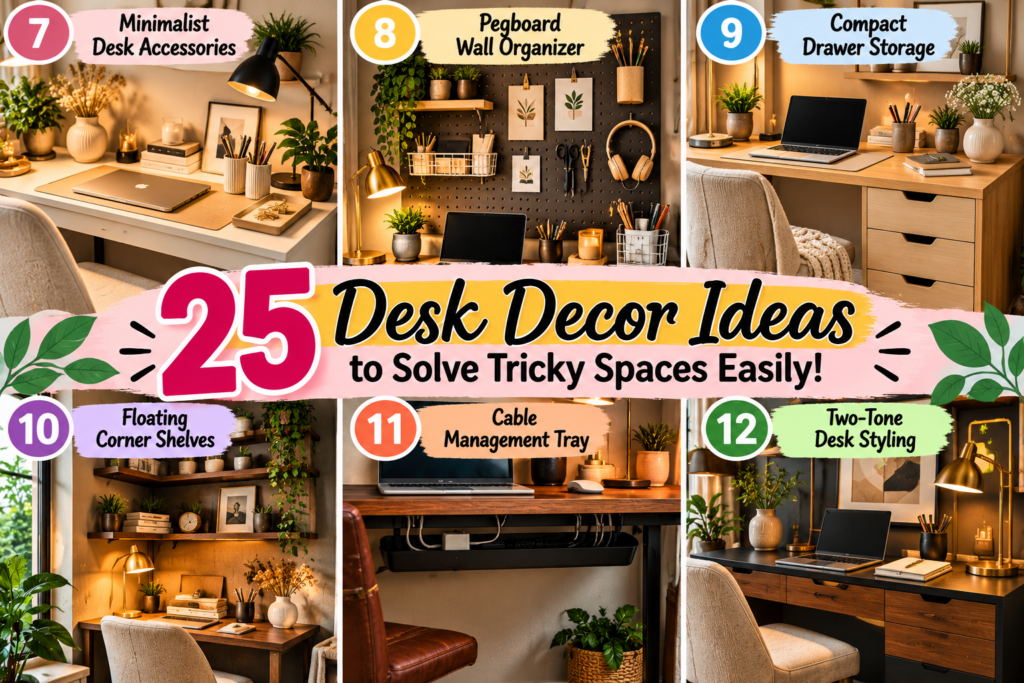
Image Description: A clean white desk with a matte black desk lamp, a beige felt desk mat, a sculptural cream pen holder, two neatly stacked notebooks, and a small amber glass vase. Soft diffused daylight, warm ivory walls, subtle wood accents, uncluttered surfaces, modern minimalist aesthetic, close three-quarter interior photography with crisp material details.
DO
- Choose two or three coordinating colors for your accessories.
- Keep a desk mat large enough for your keyboard and mouse.
- Use one compact tray for pens, clips, and other small supplies.
- Select a lamp with adjustable brightness for comfortable task lighting.
DON’T
- Fill every empty corner with decorative objects.
- Mix too many competing finishes and patterns.
- Keep unused stationery scattered across the desktop.
- Choose accessories that obstruct your screen or reduce writing space.
A few well-chosen details can make even the smallest workstation feel intentional. In my experience, removing unnecessary items often improves the appearance more than buying new decor. Start with what you already own, then add only the pieces that improve comfort, organization, or the overall look.
8. Pegboard Wall Organizer
Image Description: A warm charcoal pegboard mounted above a compact natural oak desk, holding black metal hooks, cream baskets, slim notebooks, scissors, and neatly arranged stationery. A small brass task lamp illuminates the workspace, while muted beige walls and walnut accents add warmth. Soft directional lighting, modern industrial styling, straight-on camera perspective.
Cost: Low to moderate, depending on the board and accessories.
Time: Approximately one to two hours for a basic setup.
Skill Level: Beginner, with appropriate mounting tools.
Best For: Small bedrooms, craft corners, and narrow workstations.
A pegboard turns an empty wall into flexible storage that can change as your needs evolve. Hang scissors, headphones, charging cables, and lightweight baskets where they remain easy to reach. Keep heavier supplies on the desk or in drawers, and choose mounting hardware suitable for your wall type. Matching accessories create a tidy, coordinated finish.
9. Compact Drawer Storage
Image Description: A small pale oak desk with a slim two-drawer pedestal tucked neatly underneath, styled with a closed silver laptop, a cream notebook, a black ceramic pen cup, and a warm beige desk mat. Soft afternoon sunlight, ivory walls, textured linen curtains, subtle brass details, modern Scandinavian decor, low angled interior photography.
When clutter keeps returning to your desktop, hidden storage may be the missing piece. A compact drawer unit gives everyday supplies a dedicated home while keeping the visible surface calm and functional. Choose shallow drawers for stationery and charging accessories, reserving deeper compartments for notebooks, cables, and bulkier office essentials.
Before buying a unit, measure the space beneath your desk and check that your legs have enough room to move comfortably. Drawer organizers prevent small items from becoming tangled, while simple labels make supplies easier to locate. For a cohesive look, match the drawer finish to your desktop or choose a contrasting neutral tone.
10. Floating Corner Shelves
Image Description: Three triangular floating shelves arranged vertically in a small home office corner above a compact cream desk. Style them with dark walnut frames, stacked neutral books, a small amber glass vase, a black analog clock, and framed abstract art. Deep taupe walls, warm directional lighting, rich wood textures, sophisticated modern decor, angled interior photography.
BEFORE
An empty corner offers little storage, while desk accessories compete for the limited working surface. Books and decorative pieces often end up in uneven piles.
AFTER
Floating corner shelves use the wall vertically, creating separate places for books, small storage containers, and carefully chosen decor. The desktop stays clearer, and the corner feels more intentional.
Measure the corner before purchasing shelves, especially if nearby doors, windows, or cabinets restrict the available space. Keep frequently used items on the lowest shelf and reserve higher shelves for lightweight decorations. A consistent color palette helps the arrangement look connected rather than crowded.
11. Cable Management Tray
Image Description: A rich dark walnut desk with a sleek black cable management tray mounted underneath, concealing power strips and charging wires. A silver laptop, charcoal desk mat, black wireless keyboard, and warm brass lamp sit neatly above. Moody charcoal walls, soft golden task lighting, realistic wood grain, contemporary office styling, low side-angle photography.
- Gather the cables. Identify the wires connected to your monitor, laptop, lamp, and charging devices.
- Mount an under-desk tray. Choose a tray that fits the desk width and supports the intended load.
- Separate each connection. Use reusable cable ties to keep individual cords organized and identifiable.
- Leave service loops. Allow enough slack for adjustable equipment without pulling on plugs or connectors.
- Check ventilation. Keep power adapters uncovered and follow the manufacturer’s guidance for electrical equipment.
Loose cables can make even carefully styled desk decor look unfinished. Hiding them beneath the desktop creates a cleaner view and makes floor cleaning easier. Use a properly rated power strip, avoid overloading outlets, and keep electrical connections away from liquids. A few simple adjustments can noticeably improve the entire workstation.
12. Two-Tone Desk Styling
Image Description: A compact desk styled with a matte black desktop and warm walnut drawer fronts, paired with a cream desk mat, a brushed brass lamp, black stationery holders, and a small beige ceramic vase. Deep charcoal and warm ivory walls, soft directional daylight, contrasting wood and metal textures, refined contemporary aesthetic, straight-on interior photography.
| Design Element | Option A: All Neutral | Option B: Two-Tone |
|---|---|---|
| Desktop | White or pale oak | Walnut or matte black |
| Accessories | Cream and beige | Cream with brass or black |
| Visual effect | Soft and understated | Defined and contemporary |
| Best placement | Bright, airy rooms | Rooms needing visual contrast |
Two-tone styling adds definition without requiring extra furniture or decorative objects. Start with one dominant finish for the desk and introduce a contrasting color through accessories, storage, or drawer fronts. For example, warm walnut paired with matte black creates depth, while ivory accessories soften the overall appearance. Repeat each color two or three times for a balanced finish.
13. Desktop Book Display
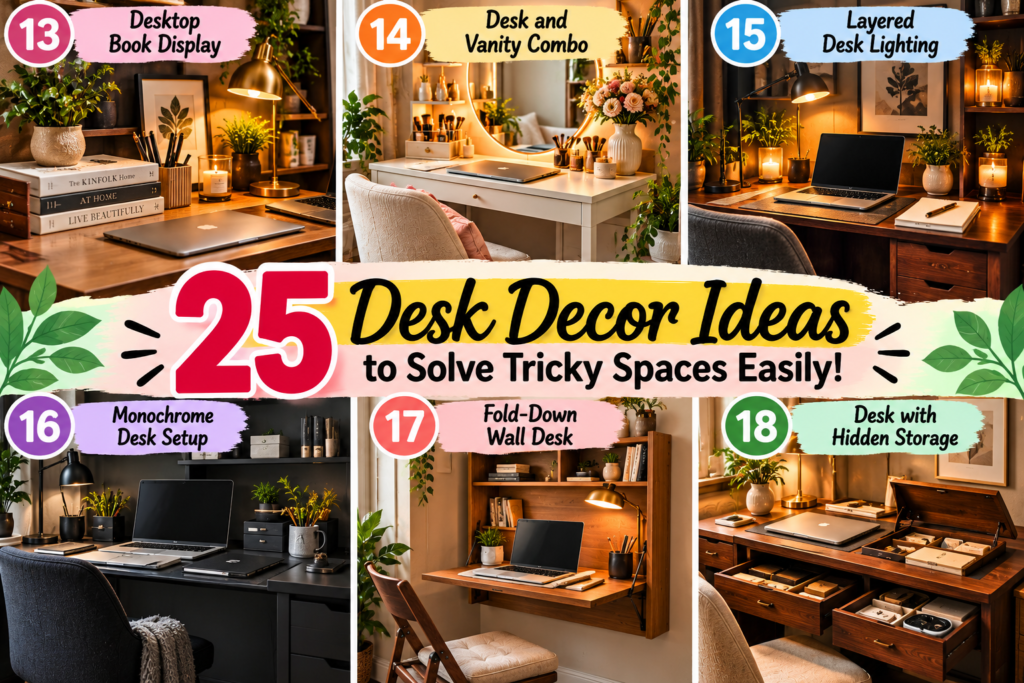
Image Description: A compact dark walnut desk featuring a neat horizontal stack of three hardcover design books, a slim black bookend, a cream ceramic pencil cup, and a small brass reading lamp. Deep taupe walls, warm amber lighting, subtle linen textures, a charcoal desk mat, sophisticated contemporary home office styling, close three-quarter camera angle.
- Choose useful titles. Select reference books, planners, or notebooks you genuinely use rather than decorative books alone.
- Create a short stack. Arrange two or three books horizontally to keep the display low and stable.
- Add a functional accent. Place a small pen holder or reading light nearby without blocking your working area.
- Leave breathing room. Keep one side of the desktop open for writing and everyday tasks.
Books can introduce color, texture, and personality without requiring extra decor purchases. For a coordinated display, combine neutral covers with one darker accent that matches your desk accessories. Keep heavier books on a stable surface, and avoid stacking them so high that the arrangement becomes awkward to reach during work.
14. Desk and Vanity Combo
Image Description: A compact cream desk that doubles as a bedroom vanity, featuring a slim walnut drawer, a round brass-framed mirror, a small makeup organizer, a closed laptop, and a blush ceramic vase. Warm ivory walls, soft natural window light, beige upholstered chair, subtle gold accents, elegant contemporary styling, eye-level interior photography.
| Design Choice | Option A: Separate Setups | Option B: Combined Setup |
|---|---|---|
| Furniture | Desk and vanity table | One multifunctional desk |
| Storage | Separate organizers | Divided drawers and trays |
| Surface use | Dedicated work and beauty areas | Shared surface with flexible zones |
| Best for | Larger bedrooms | Compact bedrooms and apartments |
A combined workstation and vanity can save valuable floor space in a small bedroom. Choose a desk with drawers to store makeup separately from stationery, and use a removable tray to keep beauty products contained. A wall-mounted mirror or compact tabletop mirror leaves more room for your laptop when work takes priority.
Keep cosmetics away from electronics, and wipe the surface before switching between activities. A chair that fits comfortably beneath the desk helps preserve walking space, while a small lidded organizer makes it easier to clear the desktop at the end of the day.
15. Layered Desk Lighting
Image Description: A dark walnut workstation illuminated by a matte black adjustable desk lamp and a subtle warm wall sconce. A charcoal desk mat, cream notebook, black ceramic pen holder, and small amber glass accent sit neatly on the surface. Deep mocha walls, gentle golden pools of light, rich wood textures, moody modern decor, side-angle interior photography.
DO
- Position an adjustable task lamp to illuminate your writing area.
- Use a warm ambient light source to soften the surrounding room.
- Choose a lamp with brightness settings suited to different tasks.
- Route the lamp cable neatly along the desk edge.
DON’T
- Rely on decorative lighting alone for detailed work.
- Place a bright bulb where it reflects directly on your screen.
- Allow lamp cords to cross walking paths.
- Choose an oversized lamp that consumes valuable desktop space.
Thoughtful lighting makes a workstation more comfortable and visually balanced. Combine focused task lighting with softer room illumination to reduce harsh contrasts between the desk and its surroundings. Choose a lamp with an adjustable head so you can direct light where it is needed, and position it to minimize glare based on your dominant hand and screen placement.
16. Monochrome Desk Setup
Image Description: A compact workstation featuring a matte black desk, charcoal desk mat, black monitor stand, dark gray storage boxes, and a cream notebook for subtle contrast. A black metal lamp casts soft directional light across the surface. Deep charcoal walls, refined matte finishes, clean geometric lines, modern minimalist aesthetic, straight-on interior photography.
Best For: Small rooms that benefit from a visually consistent setup.
Cost: Low if you reuse existing accessories.
Time: Around 30 to 60 minutes for rearranging and styling.
Skill Level: Beginner.
A monochrome workspace creates visual unity by keeping the main finishes within one color family. Combine black, charcoal, and soft gray, then introduce a small cream accent to prevent the arrangement from feeling flat. Matching organizers help loose stationery look more orderly, while varied textures add depth without introducing competing colors.
For a practical finish, keep your keyboard, mouse, and frequently used notebook within easy reach. Choose matte surfaces where possible to limit distracting reflections, and leave part of the desktop empty. This approach works particularly well in contemporary bedrooms, compact apartments, and home offices with darker furniture.
17. Fold-Down Wall Desk
Image Description: A stylish fold-down desk attached to a deep taupe wall, shown open with a slim silver laptop, a cream notebook, a black pen holder, and a compact brass task light. Warm walnut panels, concealed storage compartments, soft afternoon lighting, textured neutral decor, space-saving contemporary design, front three-quarter camera perspective.
A desk that folds away can make a tiny room much more adaptable. When work is finished, the surface closes against the wall, freeing up floor space for other activities. This arrangement is especially useful in multipurpose guest rooms, narrow hallways, and bedrooms where a permanent workstation would feel intrusive.
- Measure the folded and open positions to ensure the desk clears nearby furniture and doors.
- Choose a model with secure supports and a weight rating suitable for your equipment.
- Store lightweight supplies inside any built-in compartments to keep the work surface uncluttered.
- Mount it into appropriate structural supports according to the manufacturer’s instructions.
Before installation, check the wall construction and the desk’s mounting requirements. Keep heavy monitors and equipment off models that are not designed to support them. A compact folding chair or stool completes the arrangement, allowing the workstation to disappear when you need the room for something else.
18. Desk with Hidden Storage
Image Description: A compact espresso-brown desk with concealed drawers and a sliding storage compartment, styled with a closed laptop, a cream desk mat, a brushed brass lamp, and a small black ceramic vase. Warm beige walls, soft golden lighting, smooth wood grain, clean contemporary lines, sophisticated organized workspace, slightly elevated three-quarter camera angle.
Quick Tip:
Give every frequently used item a specific storage spot before buying additional organizers. Keep pens and sticky notes in a shallow drawer, cables in a separate compartment, and paperwork in a vertical file holder. This makes daily tidying faster and prevents hidden storage from becoming another cluttered space.
A desk with concealed compartments keeps supplies accessible without displaying everything at once. Look for slim drawers, lift-up sections, or a discreet shelf beneath the worktop if your room has limited space. Measure the available legroom before choosing a design, and check that drawers can open fully without hitting a wall or nearby furniture.
The goal is to keep the desktop ready for work rather than permanently covered with accessories. Pair hidden storage with just a few visible decorative details, such as a small lamp or framed print. This balance works well for anyone who wants a polished workspace but needs room for everyday paperwork and equipment.
19. Desk with a Mirror
Image Description: A narrow walnut desk positioned against a warm beige wall, featuring a large round black-framed mirror, a cream notebook, a compact brass lamp, and a small ceramic vase with dried flowers. Soft natural window light, textured linen curtains, dark brown accents, refined contemporary bedroom styling, balanced composition, eye-level interior photography.
DO
- Hang a mirror that fits the desk width without overwhelming the wall.
- Position the mirror to reflect natural light where possible.
- Keep the desktop accessories low to maintain an open appearance.
- Choose a frame that complements your furniture finishes.
DON’T
- Place the mirror where it creates distracting screen reflections.
- Fill the desk with decorative items that block your working area.
- Mount a heavy mirror without suitable wall fixings.
- Ignore glare from windows or overhead lighting.
A mirror can make a compact workstation feel brighter and more open, particularly in bedrooms with limited natural light. Pair it with a slim desk and a few coordinated accessories to maintain a balanced look. If you use the desk for computer work, check the reflection from your seated position before settling on the mirror’s placement.
20. Small Desk Plant Styling
Image Description: A compact dark walnut desk with one small leafy pothos plant in a matte cream ceramic pot, a charcoal desk mat, a closed silver laptop, and a black metal lamp. Deep taupe walls, warm natural daylight, subtle textured surfaces, elegant minimalist home office styling, close three-quarter camera angle with crisp plant and wood details.
Plant Choice: A compact pothos or small succulent, depending on the available light.
Cost: Low to moderate, depending on the plant and pot.
Maintenance: Match watering and care to the specific plant species.
Best Placement: A corner away from electronics and frequently used work materials.
A small plant introduces natural texture and a gentle touch of color without overwhelming a crowded desk. Choose a variety suited to your room’s actual light conditions rather than relying on appearance alone. A compact pot keeps the arrangement manageable, while a waterproof saucer protects the desktop from moisture and water marks.
Keep leaves away from screens and avoid placing a plant where its pot could tip onto electrical equipment. If your desk receives very little daylight, consider a realistic artificial plant instead. The aim is to add one natural accent while preserving enough room for your laptop, notebook, and everyday tasks.
21. Wall-Mounted Desk Lamp
Image Description: A compact walnut desk beneath a matte black adjustable wall-mounted lamp, with a cream notebook, a slim silver laptop, a charcoal pencil cup, and a small framed abstract print. Deep brown walls, warm focused lighting, subtle brass details, tactile wood grain, sophisticated modern office aesthetic, angled side-view interior photography.
Before: A traditional desk lamp occupies valuable surface space, leaving less room for writing, a laptop, and stationery.
After: A wall-mounted adjustable lamp directs light onto the working area while keeping the desktop open. The streamlined arrangement also makes small desks feel less crowded.
Choose a lamp with a suitable reach and an adjustable head so the light can follow your tasks. Check the mounting requirements and keep the light source positioned to reduce screen glare. If drilling is not possible, a clamp-on lamp offers a similar space-saving benefit without permanent wall installation.
22. Acrylic Desk Organizers
Image Description: A compact ivory desk styled with transparent acrylic organizers holding neatly arranged pens, sticky notes, paper clips, and small stationery supplies. A walnut monitor stand, cream desk mat, and brushed brass lamp add warmth. Soft natural daylight, warm beige walls, clear glossy textures, modern minimalist aesthetic, close-up three-quarter interior photography.
Clear organizers help small workspaces feel lighter because they keep supplies visible without introducing bulky visual blocks. Use a shallow acrylic tray for paper clips and sticky notes, a divided holder for pens, and a compact vertical file organizer for documents. Keeping similar items together makes daily tasks easier and reduces time spent searching for essentials.
Choose organizers based on what you actually use rather than buying a large matching set. Measure the available desk depth first, especially if your keyboard or laptop already occupies most of the surface. For a cohesive look, combine transparent containers with one warm material, such as wood or a neutral desk mat.
23. Desk with a Pinboard
Image Description: A compact walnut desk beneath a rectangular cork pinboard framed in dark wood, displaying a small calendar, neutral inspirational prints, handwritten notes, and two fabric swatches. A cream notebook, black pen cup, and brass task lamp sit on the desk. Warm afternoon light, deep taupe walls, cozy contemporary styling, straight-on camera view.
- Choose a suitable board size. Measure the wall above your desk and leave enough clearance for lamps and shelves.
- Create a useful layout. Place your calendar and current reminders near eye level.
- Coordinate the colors. Use cream, brown, black, and muted blush for a cohesive display.
- Edit it regularly. Remove outdated notes and replace completed tasks with current priorities.
A pinboard gives reminders, schedules, and personal inspiration a dedicated home without filling the desktop with loose papers. Keep the display selective so important information remains easy to find. In a shared room, a corkboard can also define the workstation visually, helping it feel separate from the surrounding bedroom or living area.
24. Laptop Riser Setup
Image Description: A compact dark walnut desk with a slim black laptop riser, wireless keyboard, matching mouse, charcoal desk mat, and a small cream ceramic pen holder. A matte black desk lamp stands to one side, while warm beige walls and soft daylight create a refined modern workspace. Clean lines, natural wood textures, slightly elevated three-quarter camera angle.
Quick Tip:
Position your laptop screen so you can look at it comfortably without continually bending your neck. If raising the laptop makes its keyboard awkward to use, pair the stand with an external keyboard and mouse. Adjust the height to suit your body rather than choosing a riser based on appearance alone.
A laptop stand creates vertical space on the desk and can improve screen positioning in a compact workstation. Choose a stable model with suitable ventilation and enough room underneath for accessories you use regularly. A foldable riser is especially practical if your desk also serves as a dining surface or shared study area.
Keep the keyboard and mouse at a comfortable height, with your shoulders relaxed and elbows near your sides. This arrangement works well for remote workers, students, and anyone who uses a laptop for extended periods. The extra space beneath the screen can hold a notebook or small accessory tray when needed.
Conclusion
Creating a beautiful workspace doesn’t require a large room or an expensive makeover. Small changes, such as adding vertical storage, improving lighting, hiding cables, or simplifying your accessories, can make your desk more functional and inviting. These Desk Decor Ideas offer inspiration for turning awkward corners and limited surfaces into spaces that work better for everyday life.
Leave a Reply