


Introduction
A cluttered bedroom can make even the coziest space feel stressful and uninviting. The good news? A few clever changes can make your room feel fresh, organized, and beautifully put together without spending a fortune.
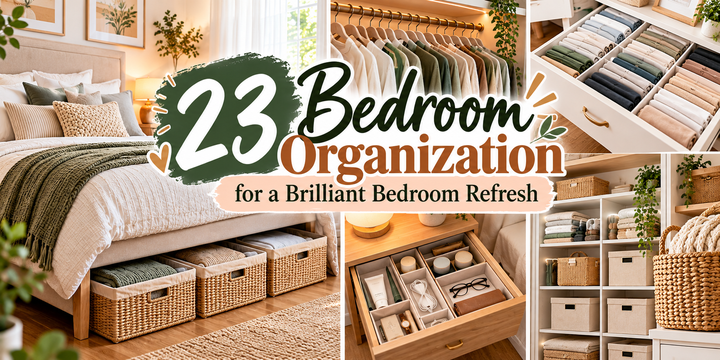
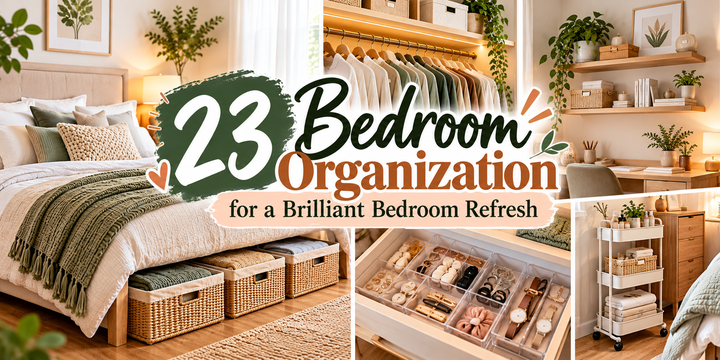
These 23 Bedroom Organization ideas will help you make the most of your space, find practical storage solutions, and create a bedroom that feels calmer every day. From under-bed storage bins and tidy dresser drawers to simple wall hooks and stylish baskets, there are plenty of ways to keep your belongings organized without sacrificing style.
Whether you’re working with a tiny rental bedroom or a spacious master suite, small changes can make a noticeable difference. I’ve noticed that giving everyday items a designated home makes it much easier to maintain a tidy room. Get ready to discover budget-friendly ideas that combine function, comfort, and beautiful bedroom style.
1. Under-Bed Storage Bins
Image Description: A serene modern bedroom with a cream upholstered bed, warm oak flooring, and neatly arranged woven under-bed storage bins holding folded linens and seasonal clothing. Soft natural morning light filters through sheer white curtains. Neutral beige, ivory, and warm wood tones, textured bedding, minimalist decor, and a low-angle interior photography perspective.
The space beneath your bed can hold far more than dust and forgotten belongings. Slide a few low-profile storage bins underneath to keep extra blankets, winter clothing, spare sheets, and accessories neatly tucked away. Choose clear containers for easy identification or woven baskets for a softer, decorative finish.
For the best results, measure the clearance beneath your bed before buying containers. Keep frequently used items near the edges and seasonal belongings farther back. In my experience, assigning a specific category to each bin makes everyday tidying much easier. Your bedroom feels more open without sacrificing valuable storage space.
2. Matching Closet Hangers
Image Description: An organized bedroom closet featuring matching slim velvet hangers arranged evenly along a wooden hanging rod. Neutral clothing in cream, beige, white, and muted sage creates a cohesive palette. Warm LED closet lighting highlights neatly spaced garments, folded sweaters, and small storage baskets. Eye-level photography, clean lines, realistic textures, and an elegant minimalist aesthetic.
- Choose slim hangers: Velvet or slim plastic designs take up less room than bulky wooden hangers, leaving extra space for clothing.
- Stick to one style: Matching hangers create a consistent appearance and prevent garments from sitting at different heights.
- Arrange by category: Group shirts, dresses, trousers, and jackets together so you can find outfits quickly.
- Organize by color: Arrange each category from light to dark for a closet that looks tidy and intentional.
- Remove unused pieces: Donate or store clothing you no longer wear to prevent overcrowding.
A coordinated closet makes getting dressed feel simpler, even when you have limited hanging space. Start with the clothes you wear most often, then arrange occasional outfits separately. Avoid squeezing garments tightly together, since crowded hangers make clothes harder to see and can leave them wrinkled. A little breathing room keeps everything accessible.
3. Nightstand Drawer Dividers
Image Description: A light oak bedside table with open drawers containing neatly separated skincare products, charging cables, reading glasses, notebooks, and small personal accessories. Cream fabric drawer organizers contrast with natural wood grain. Gentle bedside lamp lighting blends with soft daylight, creating a warm neutral palette. Three-quarter camera angle, realistic materials, uncluttered styling, and modern Scandinavian bedroom decor.
Quick Tip:
Measure your nightstand drawers before purchasing organizers, and choose adjustable dividers if the dimensions are unusual. Give each category its own compartment so small belongings have a clear home.
A tidy bedside drawer saves time during busy mornings and prevents little essentials from disappearing beneath tangled cables or loose receipts. Keep everyday items near the front and occasional-use accessories toward the back. If your nightstand is small, dedicate just one drawer to daily necessities and move everything else elsewhere. The goal is convenient access, not filling every compartment.
4. Folded Drawer Organizers
Image Description: An open white bedroom dresser displaying neatly folded T-shirts, pajamas, socks, and undergarments inside individual fabric drawer compartments. Soft ivory, dusty blue, beige, and sage clothing creates a calming palette. Natural window light illuminates the cotton textures and pale wood furniture. Overhead three-quarter view, realistic styling, crisp organization, and a cozy minimalist bedroom aesthetic.
BEFORE: Clothes pile up inside deep drawers, making it difficult to find a favorite shirt or matching pair of socks. Smaller items disappear beneath larger garments, and opening a drawer often creates more mess.
AFTER: Separate compartments hold folded clothing in neat, visible rows. Each category has its own space, making everyday essentials easier to find and put away.
Start with one drawer rather than reorganizing your entire dresser at once. Remove everything, discard damaged items, and group similar pieces together before folding them into compartments. Adjustable dividers work especially well in rental bedrooms because they require no permanent installation. Keep the most frequently worn clothes near the front for a smoother morning routine.
5. Vertical Closet Shelving
Image Description: A compact bedroom closet with white vertical shelving extending toward the ceiling, holding folded sweaters, neutral fabric bins, handbags, and neatly stacked towels. Pale oak accents and cream walls complement soft daylight from a nearby window. Warm under-shelf lighting highlights the organized layers. Straight-on interior photography, clean lines, subtle textures, and modern minimalist styling.
- Measure the available height. Check the distance between existing shelves and the ceiling before choosing additional shelving.
- Add stackable units. Use freestanding shelves or adjustable closet organizers to create extra levels without major renovations.
- Group similar items. Keep sweaters together, handbags in one section, and spare linens on another shelf.
- Store seasonal belongings above. Place rarely used items on higher shelves while keeping everyday essentials within easy reach.
Vertical storage makes a small closet work harder without expanding its footprint. Choose sturdy shelving that can safely support the intended weight, and avoid stacking heavy items overhead. Attractive fabric bins help conceal visual clutter while keeping belongings accessible. For renters, removable or freestanding systems offer flexibility when moving or changing the room layout.
6. Open Baskets Versus Closed Boxes
Image Description: A stylish bedroom storage comparison featuring open woven baskets beside a pale oak wardrobe and closed cream storage boxes stacked neatly on shelves. Folded blankets, accessories, and seasonal clothing demonstrate both options. Warm beige, ivory, and natural wicker tones, soft ambient lighting, realistic woven and linen textures, balanced composition, and eye-level interior photography.
| Comparison | Open Baskets | Closed Boxes |
|---|---|---|
| Accessibility | Quick access to daily essentials | Better for items used occasionally |
| Appearance | Adds natural texture and warmth | Creates a uniform, concealed look |
| Best contents | Throws, scarves, and accessories | Seasonal clothes and keepsakes |
| Maintenance | Contents need regular tidying | Less visual clutter on display |
| Budget | Affordable options in many sizes | Cardboard and fabric options suit tight budgets |
The right container depends on how often you use what goes inside. Open baskets work well on shelves or beside a dresser when you need quick access to everyday belongings. Closed boxes are useful for items you rarely reach for. Label each container clearly, and choose sizes that fit your shelves without leaving awkward gaps.
7. Wall-Mounted Floating Shelves
Image Description: A small, beautifully organized bedroom with two light oak floating shelves mounted above a compact desk. Neutral storage boxes, a small potted plant, framed botanical artwork, and neatly stacked books decorate the shelves. Cream walls, warm beige bedding, soft natural daylight, and subtle golden lamp light create a calm Scandinavian aesthetic. Eye-level interior photography with realistic wood grain and balanced styling.
DO:
- Install shelves above a desk or dresser to free up valuable floor space.
- Store lightweight books, decorative boxes, and frequently used accessories within easy reach.
- Match shelf finishes to existing furniture for a coordinated bedroom design.
- Use attractive baskets to conceal small items and keep the display tidy.
DON’T:
- Install shelves without checking the wall type and using suitable fixings.
- Overload shelves beyond their rated weight capacity.
- Place heavy objects where they could fall onto the bed.
- Fill every inch with decorations that collect dust.
Floating shelves make use of empty wall space while keeping everyday belongings visible and accessible. I’ve noticed that a few thoughtfully arranged items often look better than a crowded display. Before drilling, check for hidden wiring and pipes, and follow the manufacturer’s installation instructions. Renters can consider freestanding shelving or approved removable solutions instead.
8. Labeled Storage Baskets
Image Description: A bright bedroom wardrobe with natural wicker baskets and soft beige fabric bins arranged on white shelves. Each basket has a simple cream label identifying accessories, workout clothes, spare linens, and seasonal items. Warm oak accents, folded neutral garments, gentle daylight, and soft overhead lighting create a practical yet inviting aesthetic. Front-facing composition, detailed textures, and realistic interior photography.
Cost: Low to moderate, depending on basket material and size.
Time: Around 20 to 40 minutes for a small storage area.
Skill Level: Beginner.
Best For: Closets, open shelving, dresser tops, and bedroom corners.
Result: Easier access to belongings and less visible clutter.
Clear labels turn ordinary baskets into a practical storage system that everyone in the household can follow. Choose washable labels or reusable tags so you can update them when your needs change. Keep labels facing outward, group similar categories together, and avoid mixing unrelated belongings in one basket. This simple habit makes putting things away quicker and helps prevent clutter from returning.
9. A Dedicated Laundry Corner
Image Description: A compact bedroom corner featuring a slim woven laundry hamper beside a pale oak dresser, with a small wall hook for a laundry bag and a neatly folded towel on top. Cream walls, ivory bedding, natural wicker, and muted sage accents create a fresh palette. Soft morning sunlight, warm ambient lighting, realistic linen textures, and a clean, minimalist interior photography style.
A designated laundry spot can prevent worn clothes from collecting on chairs, floors, and the foot of the bed. Choose a slim hamper that fits beside your wardrobe or in an unused corner without blocking drawers or walkways. A lidded design conceals laundry, while a breathable hamper helps air circulate around damp clothing.
Keep the system simple enough to maintain every day. If you separate lights and darks, choose a divided hamper or two small bags instead of one bulky container. Empty it regularly, and never leave wet towels or sweaty clothes sitting for long periods. The result is a bedroom that looks tidier even between laundry days.
10. Slim Rolling Storage Carts
Image Description: A narrow three-tier rolling storage cart tucked beside a bedroom dresser, holding neatly arranged skincare bottles, folded hand towels, books, and small woven baskets. Matte white metal shelves, pale oak furniture, cream walls, and muted sage accents create a modern neutral palette. Soft window light and warm bedside lighting highlight realistic textures in a clean, compact bedroom setting.
- Measure the gap: Check the space between furniture pieces before choosing a cart, allowing enough room to roll it out.
- Assign each tier: Store daily essentials on top, accessories in the middle, and backup supplies on the bottom.
- Add small containers: Use inexpensive trays or baskets to prevent tiny items from sliding around.
- Choose locking wheels: Lockable casters help keep the cart stable when you access your belongings.
- Keep it lightweight: Avoid overloading the cart, especially if you plan to move it frequently.
A slim rolling cart provides flexible storage without requiring permanent installation. It works especially well in bedrooms with limited closet space, where extra room for toiletries, craft supplies, or accessories can be hard to find. Keep the top shelf visually simple and group smaller items together. When guests visit, roll the cart into the closet to clear the floor quickly.
11. Clear Acrylic Drawer Trays
Image Description: A white dresser with shallow drawers fitted with transparent acrylic trays holding neatly separated jewelry, hair clips, watches, skincare items, and everyday accessories. Cream and blush accents complement pale oak flooring and neutral bedding. Soft natural daylight reflects gently off the clear surfaces, while warm ambient lighting adds depth. Overhead close-up photography, crisp organization, realistic materials, and a refined contemporary bedroom aesthetic.
Quick Tip:
Group items by how you use them rather than by appearance alone. Keep hair accessories together, place everyday jewelry in a front compartment, and reserve a separate tray for small items that tend to get lost.
Clear acrylic organizers make it easy to spot what you need without rummaging through crowded drawers. Their transparent finish keeps the drawer looking visually light, which is especially useful when organizing small bedrooms. Measure the drawer’s interior dimensions before purchasing trays, and choose modular pieces that fit together neatly. Wipe them regularly to remove dust, fingerprints, and product residue.
12. A Bedside Charging Station
Image Description: A calm, modern bedroom nightstand with a compact charging station, neatly routed cables, a smartphone, wireless earbuds, and a small ceramic catchall tray. A cream upholstered bed, warm oak bedside table, soft ivory bedding, and muted beige accents create a cohesive palette. Gentle bedside lamp lighting combines with natural evening light, highlighting tidy surfaces and realistic materials in a close three-quarter interior view.
BEFORE: Charging cables spill across the nightstand, adapters compete for outlet space, and small electronics become mixed with books, glasses, and other daily essentials. The surface feels crowded even when the rest of the room is tidy.
AFTER: A designated charging area keeps devices together, cables controlled, and the bedside surface easier to clean. Everyday essentials remain accessible without taking over the entire nightstand.
Choose a charging dock or small cable organizer that fits your devices and available outlet setup. Secure loose cords with reusable cable clips, and keep chargers away from bedding where heat can build up. Avoid running cables beneath rugs or pinching them behind heavy furniture. A tidy charging station makes the bedroom feel calmer and reduces the daily search for missing cables.
13. Drawer Folding Systems
Image Description: An open bedroom dresser filled with vertically folded T-shirts, leggings, pajamas, and casual tops arranged in neat rows. Soft beige fabric dividers separate clothing by category, while white oak drawers and cream walls create a warm neutral setting. Gentle daylight illuminates the cotton textures. Overhead three-quarter photography, minimal styling, realistic fabric details, and a practical Scandinavian bedroom aesthetic.
- Empty one drawer. Remove every item so you can see the available space and identify clothes you no longer wear.
- Group similar garments. Separate T-shirts, sleepwear, leggings, and workout clothes before folding.
- Fold into compact rectangles. Aim for consistent shapes that stand upright rather than collapsing into piles.
- Arrange vertically. Place folded garments side by side so each piece remains visible.
- Maintain the system. Return clean clothes to their assigned rows instead of stacking them on top.
Vertical folding helps you use drawer space more efficiently while making everyday clothing easier to find. Rather than lifting an entire pile to reach one shirt, you can see several options at once. Start with your most frequently worn items, and adjust the folding size to suit the drawer depth. Even one organized drawer can make busy mornings feel less chaotic.
14. Under-Shelf Hanging Baskets
Image Description: A neatly organized bedroom wardrobe featuring white wire under-shelf baskets attached beneath sturdy wooden shelves. The baskets hold folded scarves, lightweight T-shirts, and small accessories, while neutral storage boxes sit above them. Cream, white, and pale oak tones dominate the scene. Soft closet lighting creates gentle shadows, with a straight-on camera angle, realistic metal textures, and clean minimalist styling.
| Storage Approach | Without Hanging Baskets | With Hanging Baskets |
|---|---|---|
| Shelf space | Small items compete with folded clothes | Separate compartments create extra storage |
| Accessibility | Accessories may get buried | Frequently used pieces stay visible |
| Installation | No additional equipment needed | Most designs slide or clip onto compatible shelves |
| Best use | Larger folded items | Lightweight clothing and accessories |
| Main consideration | Easy setup but limited separation | Check shelf thickness and weight capacity |
Under-shelf baskets make unused space beneath closet shelves more useful, especially in small bedrooms where every inch counts. They can hold lightweight items that otherwise clutter dresser drawers or wardrobe shelves. Before buying, check the shelf construction and basket dimensions to ensure a secure fit. Avoid storing heavy objects in unsupported baskets, and leave enough clearance for clothing below.
15. A Minimalist Dresser Top
Image Description: A pale oak bedroom dresser with a clean, uncluttered surface featuring a small ceramic tray, a simple table lamp, a glass vase with fresh greenery, and one framed artwork leaning against a warm white wall. Cream bedding and muted beige accents complement the wood grain. Soft morning sunlight, gentle shadows, realistic ceramic and linen textures, and elegant minimalist interior photography.
DO:
- Keep a small tray for jewelry, keys, and everyday pocket items.
- Choose one lamp or decorative object as the main focal point.
- Leave plenty of visible surface space between accessories.
- Store spare toiletries, paperwork, and backup products inside drawers.
DON’T:
- Turn the dresser into a permanent laundry station.
- Cover the entire surface with perfume bottles and small decorations.
- Keep items you rarely use in the most accessible spot.
- Ignore dust collecting beneath decorative objects.
A clear dresser top can make the entire bedroom feel more spacious, even when the room itself is small. Select two or three useful accessories and give everything else a proper home inside a drawer or basket. Leave enough room to set down folded laundry or prepare an outfit. The simplest surfaces are often the easiest to keep clean.
16. Over-Door Storage Pockets
Image Description: A white bedroom door fitted with a slim over-door fabric organizer featuring multiple deep pockets for scarves, hair accessories, charging cables, folded sleepwear, and small personal items. Soft beige canvas, cream walls, pale oak flooring, and muted sage accents create a coordinated neutral palette. Natural daylight illuminates the scene, with a straight-on camera angle, realistic fabric textures, and practical minimalist styling.
Cost: Low to moderate, depending on the material and pocket design.
Time: Approximately 10 to 20 minutes for setup and sorting.
Skill Level: Beginner.
Best For: Small bedrooms, shared rooms, and closets with limited shelving.
Result: More accessible storage without using additional floor space.
Over-door organizers turn an often overlooked surface into useful storage for lightweight belongings. Choose clear pockets when you want to see everything at a glance, or fabric compartments for a softer appearance. Before installing one, check the door clearance and hardware compatibility. Avoid placing excessive weight on the organizer, and keep frequently used items in the easiest-to-reach pockets.
17. Seasonal Clothing Rotation
Image Description: An organized bedroom closet divided into everyday clothing and seasonal storage, with lightweight summer garments hanging neatly beside a labeled fabric box containing winter sweaters. Neutral cream, soft gray, muted sage, and natural wood tones create a cohesive palette. Warm closet lighting and gentle daylight reveal tidy shelves, breathable storage bags, and realistic fabric textures in a balanced interior composition.
A seasonal clothing rotation can free up surprising amounts of closet space without requiring new furniture. Start by separating the clothes you wear regularly from pieces suited to colder or warmer weather. Wash and completely dry garments before storing them in labeled containers, and keep delicate fabrics in suitable breathable storage.
- Move off-season clothing to higher shelves or under-bed containers.
- Keep everyday outfits at eye level for easier access.
- Label each container with its contents and season.
- Store delicate garments according to their care instructions.
- Review stored clothing before the next seasonal change.
This system works particularly well when your wardrobe is small but your clothing needs change throughout the year. Store containers in a dry location away from direct sunlight, and avoid compressing delicate garments for long periods. A simple seasonal swap makes your everyday closet easier to navigate while helping you notice which pieces you actually wear.
18. A Compact Jewelry Station
Image Description: A small bedroom vanity featuring a shallow wooden jewelry tray, a cream velvet ring holder, a compact necklace stand, and a divided box for earrings and bracelets. A round mirror hangs above a pale oak tabletop, complemented by soft ivory walls and muted blush accents. Warm vanity lighting blends with natural daylight, highlighting delicate metal details and velvet textures in an elegant close-up interior photograph.
Jewelry is easier to manage when every piece has a designated place. Instead of leaving necklaces tangled on a dresser or earrings scattered in a drawer, create a compact station using affordable trays, small boxes, or a divided organizer.
Separate delicate chains from chunky bracelets, and keep pairs of earrings together. Use a soft-lined compartment for pieces that scratch easily, and store valuable jewelry in a secure location. If you have very little vanity space, a single divided drawer insert may be all you need. Keeping accessories visible and organized helps you choose what to wear without creating another mess.
19. A Dedicated Reading Nook
Image Description: A cozy bedroom corner with a compact upholstered accent chair, a slim wooden side table, a small stack of books, and a woven basket holding extra blankets. Cream, warm beige, muted sage, and natural oak create a soothing palette. Soft daylight filters through sheer curtains, complemented by a warm floor lamp. Eye-level interior photography, layered textiles, and minimalist styling.
- Choose a compact seat: Select a small chair or cushioned bench that fits without blocking walkways.
- Add a book basket: Keep current reads together in one woven or fabric container.
- Use vertical space: Install a narrow floating shelf for books if floor space is limited.
- Include soft lighting: Choose a reading lamp that provides focused illumination without lighting the entire room.
- Limit the accessories: Keep only a few books, a throw blanket, and useful essentials nearby.
A dedicated reading corner gives books and relaxation essentials a home instead of letting them spread across your bed and nightstand. Even a small bedroom can accommodate this setup if you use a corner that would otherwise remain empty. Keep the arrangement simple and choose furniture that serves more than one purpose whenever possible.
20. A Headboard Storage Pocket
Image Description: A neatly styled bedroom with a soft beige upholstered headboard featuring an attached fabric storage pocket holding a paperback book, reading glasses, and a small notebook. White linen bedding, pale oak bedside furniture, and muted taupe accents create a warm neutral palette. Gentle natural window light and subtle bedside lamp illumination highlight the textures in a close three-quarter interior photograph.
Quick Tip:
Choose a headboard organizer with secure straps or a design made for your specific bed frame. Keep heavier objects in a bedside drawer rather than placing them in a hanging pocket.
A headboard pocket offers convenient storage when a traditional nightstand will not fit beside the bed. It keeps lightweight essentials within reach while freeing up the mattress and nearby surfaces. Look for a washable fabric design with separate compartments for small items. Before purchasing, check that the organizer will not interfere with your pillow placement or damage your headboard finish.
21. A Hidden Bedside Hamper
Image Description: A compact bedroom featuring a slim lidded laundry hamper tucked discreetly between a wooden bed frame and a pale oak wardrobe. Neutral cream bedding, beige walls, natural wicker textures, and muted sage accents create a coordinated palette. Soft morning daylight illuminates the space, with warm ambient lighting and a low-angle interior photography perspective highlighting the efficient furniture arrangement.
BEFORE: Worn clothing lands on the floor or collects on a bedroom chair because the laundry basket is bulky or inconveniently placed. The corner looks untidy, and laundry becomes part of the room’s everyday visual clutter.
AFTER: A slim hamper sits neatly beside the wardrobe or beneath a suitable furniture overhang, keeping used clothes contained and the walkway clear. A lidded design helps conceal the contents.
Measure the available gap before choosing a hamper, and make sure you can remove it easily when laundry day arrives. Breathable materials are useful for ordinary dry clothing, while damp towels should be dried promptly rather than sealed inside. For a polished appearance, choose a hamper that complements your bedding or furniture. Convenient placement makes it more likely that clothes end up where they belong.
22. Wall Hooks for Accessories
Image Description: A bright, organized bedroom wall featuring a row of simple matte brass and natural wood hooks holding handbags, lightweight scarves, a sun hat, and a small everyday tote. Cream walls, pale oak furniture, ivory bedding, and muted sage accents create a soft neutral palette. Natural window light casts gentle shadows, highlighting realistic wood and fabric textures in a straight-on minimalist interior photograph.
- Choose the right location. Install hooks near the wardrobe or bedroom door so frequently used accessories are easy to reach.
- Measure the spacing. Leave enough room between hooks to prevent bags and scarves from overlapping.
- Select suitable hardware. Use wall anchors appropriate for the wall material and the weight of the items.
- Group belongings thoughtfully. Hang everyday bags and scarves together, keeping heavier items on securely mounted hooks.
Wall hooks turn empty vertical space into useful storage while keeping accessories off chairs, floors, and dresser tops. They are particularly helpful in rental bedrooms when you choose approved removable hooks suited to the intended load. Check weight limits before hanging anything, and avoid placing valuable or delicate items where they could be damaged by direct sunlight or frequent contact.
23. A Weekly Reset Basket
Image Description: A stylish bedroom featuring a medium-sized woven basket beside a pale oak dresser, filled with a neatly folded cardigan, a book, a small notebook, and everyday accessories awaiting their proper places. Cream walls, ivory bedding, and warm beige textures create a cohesive neutral palette. Soft morning sunlight and gentle lamp lighting add warmth, with an eye-level camera angle and realistic interior styling.
Cost: Low, especially if you reuse a basket you already own.
Time: Five to ten minutes for a quick daily tidy.
Skill Level: Beginner.
Best For: Busy households, shared bedrooms, and small spaces that collect everyday clutter.
Result: Fewer stray belongings and an easier path to a tidy room.
A reset basket gives misplaced belongings a temporary home instead of allowing them to spread across the bedroom. Place it somewhere convenient, then spend a few minutes each evening returning items to their proper drawers, shelves, or rooms. Avoid treating the basket as permanent storage. Emptying it regularly keeps small messes from turning into another overflowing pile.
Conclusion
Creating a beautiful, clutter-free bedroom doesn’t require expensive furniture or a complete makeover. These Bedroom Organization ideas show how simple changes, from matching hangers to clever storage baskets, can make your space more functional, relaxing, and enjoyable.
Start with one area that needs attention, whether it’s your nightstand, closet, or the space beneath your bed. Small improvements can build momentum and make tidying feel less overwhelming. In my experience, the best systems are the ones that fit naturally into your daily routine.
Leave a Reply