

Introduction
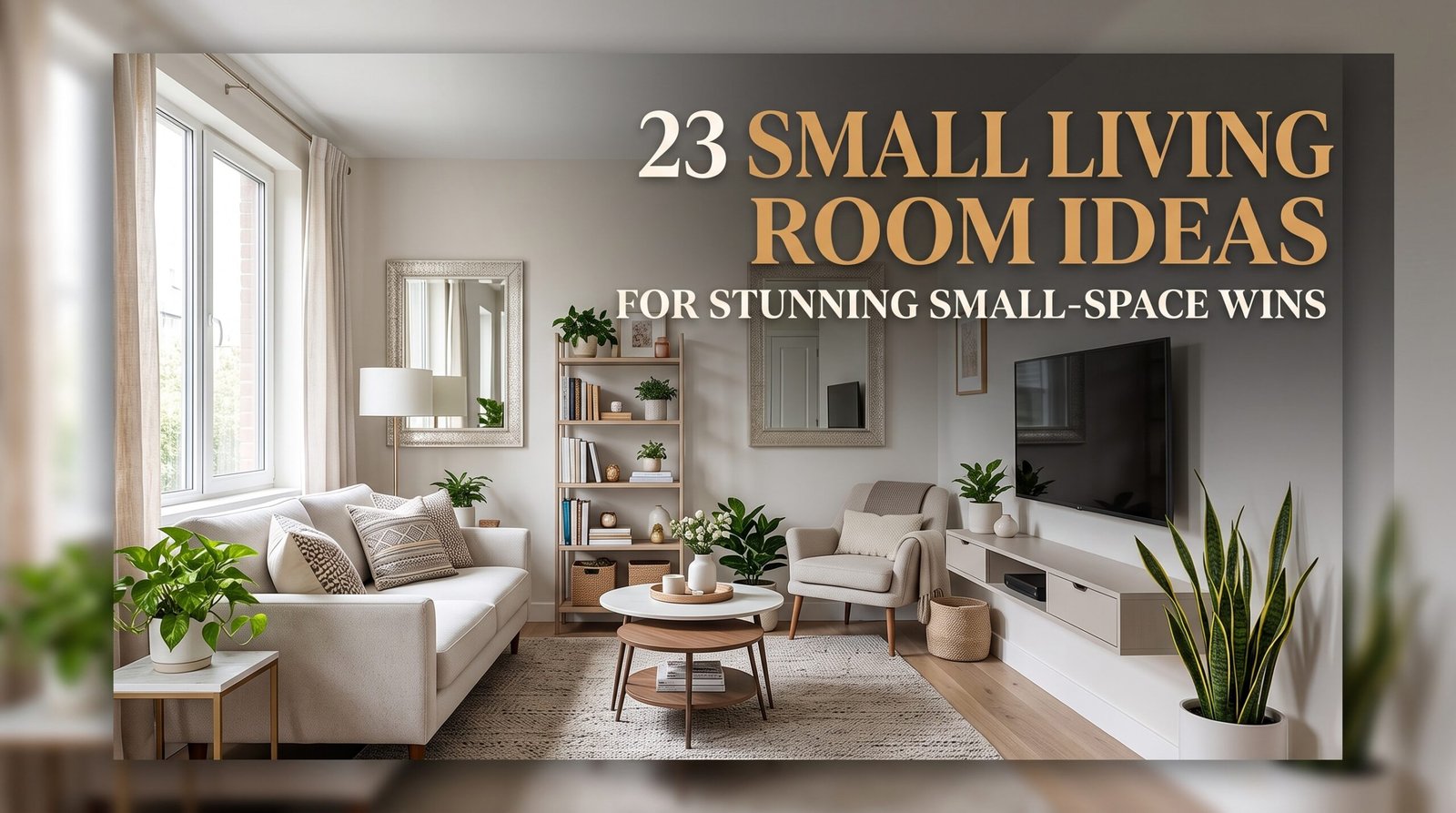
A small living room can feel cozy, stylish, and beautiful without sacrificing comfort. The secret is knowing how to make every inch count. These 23 Small Living Room Ideas will help you create a brighter, more organized, and inviting space, even if you’re working with limited square footage. From clever storage solutions and space-saving furniture to soft neutral colors, statement mirrors, and cozy lighting, you’ll discover practical ways to make your living room feel more open and thoughtfully styled. I’ve noticed that small changes, such as rearranging furniture, choosing the right rug, or adding floor-length curtains, can make a room feel noticeably different. You don’t need a major renovation or an expensive shopping list to get started. Whether you’re decorating your first apartment, refreshing a family home, or working with an awkward layout, these ideas offer inspiration you can adapt to your budget and lifestyle. Keep reading to find your favorite small-space decorating tricks and discover simple ways to make your living room feel more comfortable, functional, and uniquely yours.
1. Floating Furniture Layout
Image Description: A small modern living room with a cream loveseat floating slightly away from the wall, a slim oval coffee table, a soft beige rug, and a narrow console behind the sofa. Warm oak flooring, ivory walls, muted sage cushions, natural window light, subtle greenery, and a wide-angle interior photography perspective.
A smarter furniture layout can make a cramped living room feel surprisingly open. Instead of pushing every piece against the walls, position your sofa to create a natural conversation area. Leave clear walking paths between the seating, doorway, and nearby furniture so the room feels organized rather than crowded.
In my experience, furniture scale matters just as much as placement. A compact sofa paired with a small oval coffee table often works better than oversized pieces arranged around the edges. Keep the center visually light, and your living area will feel more spacious without requiring extra square footage.
2. Vertical Wall Shelving
Image Description: A compact living room featuring tall, narrow oak floating shelves extending toward the ceiling, styled with small trailing plants, neutral ceramic vases, stacked books, and framed minimalist prints. Warm white walls, a light beige sofa, soft afternoon sunlight, natural wood textures, and an airy Scandinavian-inspired interior photographed from the front corner.
- Go vertical: Install shelves above a side table or beside the television to use overlooked wall space.
- Choose slim profiles: Narrow shelves provide storage without protruding too far into the room.
- Mix practical items: Arrange books, small baskets, and decorative objects to balance function with style.
- Leave breathing room: Keep some shelf space empty so the display does not feel cluttered.
- Repeat your palette: Use two or three coordinating colors for a calm, connected appearance.
Vertical storage is especially useful when floor space is limited but your belongings still need a home. Place frequently used items on the lower shelves and lighter decorations higher up. Before drilling, check the wall type and locate studs where needed. Secure heavy shelving properly, especially in homes with children or pets.
3. Oversized Statement Mirror
Image Description: A small elegant living room with a large arched mirror in a slim brass frame leaning against a warm ivory wall. A compact oatmeal sofa, pale oak side table, cream textured rug, delicate greenery, and soft linen curtains complete the setting. Natural daylight reflects across the room, creating a bright, sophisticated, modern organic aesthetic.
Quick Tip:
Position a large mirror opposite or diagonally across from a window to reflect daylight into darker corners. Choose a simple frame that complements your furniture, and secure leaning mirrors according to the manufacturer’s instructions. Avoid reflecting cluttered shelves or busy storage areas.
Mirrors can make small living rooms feel brighter and visually deeper without taking up valuable floor space. A tall arched design adds height, while a wide rectangular mirror can emphasize the room’s width. For the best result, check what the mirror reflects before deciding where to place it. The right reflection matters as much as the mirror itself.
4. Light Neutral Color Palette
Image Description: A small living room decorated in warm ivory, soft beige, and creamy white, featuring a compact linen sofa, pale oak coffee table, textured cream rug, and sheer white curtains. Gentle natural daylight fills the room, highlighting subtle fabric textures, matte walls, and understated accessories in a serene modern minimalist interior.
BEFORE
Dark walls, heavy curtains, and several competing colors can make a small living room feel visually crowded. Even attractive furniture may seem bulky when the room lacks a consistent color scheme.
AFTER
Soft neutrals create a continuous, airy appearance. Cream walls, beige upholstery, and pale wood furniture help the space feel brighter and more connected without removing personality.
For balanced small-space decorating, combine three or four related shades instead of using plain white everywhere. Add interest through boucle cushions, woven baskets, linen curtains, and natural wood finishes. These textures prevent the room from looking flat. If you love darker colors, introduce them through small accessories rather than covering every wall.
5. Compact Multifunctional Furniture
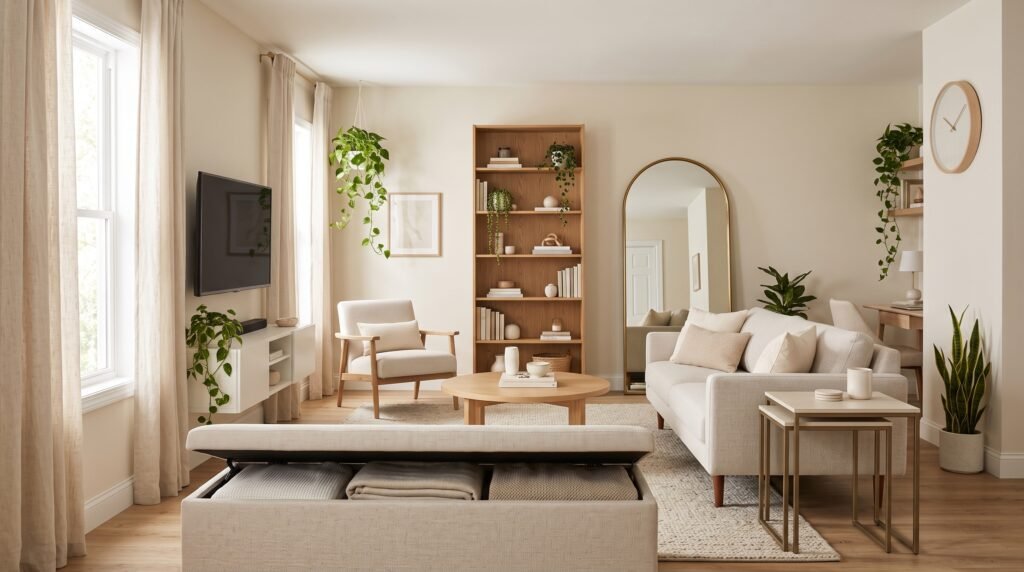
Image Description: A stylish small apartment living room with a compact beige sofa, a wooden storage ottoman serving as a coffee table, a slim nesting table set, and a narrow console desk against the wall. Cream textiles, warm oak finishes, soft natural window light, muted green accents, and a practical contemporary Scandinavian aesthetic.
- Choose a storage ottoman. Use it as a footrest, extra seat, or coffee table with a sturdy tray on top.
- Add nesting tables. Keep the smaller table tucked underneath until guests need another surface.
- Select a sofa bed. Choose a model with a comfortable mattress if your living room doubles as a guest room.
- Look for hidden storage. Consider lift-top coffee tables and benches with concealed compartments.
- Measure before buying. Check the furniture’s full dimensions, including the clearance needed to open drawers or extend sleeping sections.
Multifunctional furniture helps a compact room work harder without filling it with extra pieces. A storage ottoman can hide blankets, remotes, and magazines while keeping everyday essentials close. Prioritize furniture that solves a real problem in your home. One useful piece is often better than several smaller items competing for the same floor space.
6. Round Coffee Tables
Image Description: A bright compact living room featuring a round light oak coffee table centered in front of a petite cream sofa. A textured ivory rug, curved accent chair, soft sage cushions, delicate ceramic vase, and full-length sheer curtains complement the arrangement. Natural daylight, warm wood grain, and a clean contemporary organic design.
| Design Detail | Option A: Rectangular | Option B: Round |
|---|---|---|
| Walking paths | Sharp corners can feel restrictive | Curved edges soften movement |
| Visual appearance | Creates strong straight lines | Adds a softer silhouette |
| Best placement | Longer sofa arrangements | Compact or tight seating areas |
| Styling | Trays and linear accessories | Rounded trays and sculptural decor |
A round coffee table can make navigating a small living room easier, especially when the sofa sits close to another chair or doorway. Choose a diameter that leaves comfortable clearance around the table, ideally about 18 inches between the table and seating when the layout allows. A slim pedestal base or open legs also help preserve a lighter visual appearance.
7. Floor-to-Ceiling Curtains
Image Description: A small elegant living room with ivory linen curtains hung close to the ceiling and falling all the way to the pale oak floor. A compact cream sofa, textured neutral rug, slim black curtain rod, and soft green cushions complete the decor. Bright natural window light, warm beige tones, and an airy contemporary aesthetic.
DO
- Mount the curtain rod several inches above the window frame to draw the eye upward.
- Extend the rod beyond the window edges so open curtains reveal more glass.
- Choose lightweight linen or sheer fabrics that allow daylight to filter through.
- Match the curtain color closely to the walls for a continuous visual effect.
DON’T
- Hang curtains directly at the top of the window if the ceiling allows a higher placement.
- Choose heavy, bulky fabrics that block valuable daylight.
- Let excessive fabric pool across walking areas.
- Use oversized decorative tiebacks that consume space around narrow windows.
Floor-to-ceiling curtains create the impression of taller walls without changing the room’s structure. I’ve noticed that simple, full-length panels often look more polished than short curtains in compact interiors. Measure carefully before ordering, and aim for a hem that just touches the floor or sits slightly above it for a neat finish.
8. Hidden Storage Ottomans
Image Description: A cozy small living room featuring a rectangular oatmeal-colored storage ottoman in front of a petite cream sofa. The ottoman has a hinged lid, subtle tufting, and concealed blankets inside. A round wooden tray holds a ceramic mug and small vase, while warm sunlight, pale oak flooring, and neutral textiles create a welcoming modern interior.
Cost: Moderate, depending on upholstery and storage capacity
Time: 15 to 30 minutes for arranging and styling
Skill Level: Beginner
Best For: Apartments, family rooms, and compact homes
Result: Concealed storage with extra seating and a flexible coffee table surface
Clutter can quickly overwhelm a small living room, especially when blankets, toys, and everyday essentials have nowhere to go. A storage ottoman gives these items a discreet home while serving several purposes. Choose a firm, flat-topped design if you plan to use it as a coffee table, and add a stable tray for drinks or decorative accents.
9. Wall-Mounted Television
Image Description: A compact contemporary living room with a flat-screen television mounted on a warm white wall above a slim floating oak media console. Concealed cables, a small potted plant, neutral books, and a low cream sofa create a clean arrangement. Soft natural daylight, subtle beige accents, and uncluttered Scandinavian styling, photographed straight on.
Sometimes, the largest obstacle in a small living room is a bulky entertainment unit. Mounting the television on the wall can free up floor space and give the room a cleaner appearance.
Start by choosing a comfortable viewing height based on your usual seated position. Then measure the wall and select a floating console or narrow cabinet for devices and accessories. Hide cables using an approved cable-management system, and attach the television bracket to suitable structural support. Keep the surrounding decor simple so the screen remains the focal point without making the entire wall feel crowded.
10. Space-Saving Loveseat
Image Description: A charming small living room featuring a compact cream loveseat with slim wooden legs, two sage green cushions, and a soft textured throw. A petite round side table, light oak flooring, a neutral woven rug, and sheer white curtains complete the space. Gentle natural daylight, warm beige accents, and modern Scandinavian styling.
- Measure the seating area: Check the loveseat’s width and depth, then leave enough room for comfortable movement around it.
- Choose raised legs: Exposed wooden or metal legs allow more floor to remain visible.
- Keep cushions minimal: Two or three well-chosen cushions provide comfort without making the seat feel crowded.
- Pair it with slim furniture: A narrow side table or small nesting tables preserve valuable floor space.
A loveseat offers comfortable seating without the bulk of a full-size sofa. For small living room ideas that balance style and function, look for compact arms, a shallow profile, and upholstery in a light neutral shade. If you entertain often, add one lightweight accent chair that can move when extra seating is needed.
11. Layered Ambient Lighting
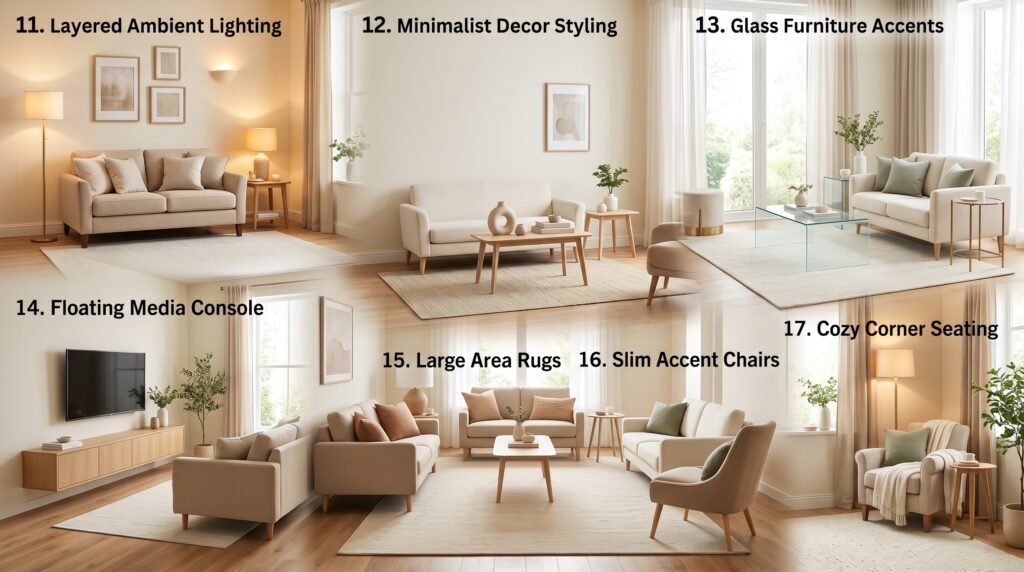
Image Description: A small cozy living room illuminated by three lighting sources: a slim floor lamp beside a beige loveseat, a warm table lamp on a narrow oak side table, and soft wall sconces above framed artwork. Cream walls, textured linen cushions, a pale rug, and gentle golden light create an inviting contemporary atmosphere.
Quick Tip:
Combine three types of lighting: ambient light for overall brightness, task lighting for reading, and accent lighting for artwork or architectural details. Choose warm white bulbs around 2700K to 3000K for a relaxed living room atmosphere.
Relying on one overhead fixture can leave corners looking dark and make a compact room feel flat. A slim floor lamp beside the sofa and a small table lamp near your favorite reading spot create depth without requiring major renovations. Choose fixtures with narrow bases, and position cords safely away from walkways to keep the arrangement practical.
12. Minimalist Decor Styling
Image Description: A beautifully restrained small living room with a petite ivory sofa, one sculptural ceramic vase, two stacked neutral books, a small leafy plant, and a single framed abstract print. Warm white walls, pale oak furniture, a textured beige rug, soft natural window light, and a clean modern organic aesthetic with generous negative space.
BEFORE
Every available surface holds decorative objects, from crowded shelves to a coffee table covered with ornaments, books, and accessories. The room feels busy, even though none of the individual items is particularly large.
AFTER
A few carefully chosen pieces give the room a calmer appearance. The coffee table has room for everyday use, shelves feel lighter, and favorite decorations become easier to notice.
Start by removing everything from one surface, then return only the pieces you genuinely enjoy or regularly use. Combine objects of different heights, such as a small vase beside a horizontal stack of books, to create interest without overcrowding. Keep practical essentials in a nearby drawer or basket, and leave some empty space visible.
13. Glass Furniture Accents
Image Description: A compact modern living room with a transparent glass coffee table, a petite cream sofa, a slim brass side table, and a soft ivory area rug. Pale oak flooring, muted sage cushions, delicate greenery, and sheer curtains complement the arrangement. Bright natural daylight reflects across the glass surfaces, creating an airy contemporary interior.
- Select a clear coffee table. Choose a tempered glass top with a slim frame to keep the seating area visually open.
- Add a small glass side table. Place it beside the sofa for a lamp, book, or cup of tea.
- Keep surrounding furniture simple. Pair transparent surfaces with understated upholstery and clean silhouettes.
- Check the edges and stability. Choose sturdy construction and rounded corners where possible, especially in busy households.
Glass furniture allows more of the floor and rug to remain visible, reducing the visual weight of bulky pieces. It works particularly well in rooms with limited natural light or several furniture items close together. Keep glass surfaces clean, and avoid overcrowding them with decorations. Households with young children may prefer acrylic alternatives or rounded, sturdy designs.
14. Floating Media Console
Image Description: A small stylish living room featuring a wall-mounted light oak media console beneath a flat-screen television. The floating cabinet has handle-free doors, concealed storage, and a clean horizontal profile. Warm white walls, a beige sofa, subtle greenery, and pale wood flooring complete the scene, illuminated by soft daylight and warm accent lighting.
| Design Detail | Option A: Floor Console | Option B: Floating Console |
|---|---|---|
| Floor visibility | Cabinet covers more flooring | Visible floor creates a lighter look |
| Storage | Often offers generous capacity | Varies by cabinet size and depth |
| Cleaning | Requires access beneath furniture | Open space beneath simplifies cleaning |
| Installation | Usually straightforward placement | Requires secure wall mounting |
A floating media console keeps the television area organized while preserving visible floor space underneath. Choose a cabinet wide enough for your equipment but shallow enough to avoid dominating the room. Before installation, check wall construction, locate suitable supports, and confirm that cables, ventilation, and device connections remain accessible.
15. Large Area Rugs
Image Description: A compact living room with a generously sized warm ivory area rug extending beneath the front legs of a small beige sofa and two slim accent chairs. A light oak coffee table, soft cream curtains, muted terracotta cushions, and natural woven textures complete the setting. Bright window light and a balanced modern organic aesthetic.
DO
- Choose a rug large enough to connect the main seating pieces visually.
- Place the front legs of the sofa and chairs on the rug when the layout allows.
- Use subtle patterns or tonal textures to add interest without visual clutter.
- Select a low-pile rug for easier movement around compact furniture.
DON’T
- Choose a tiny rug that floats alone in the center of the room.
- Cover the entire floor with a pattern that competes with other decor.
- Ignore rug pads, which help prevent slipping on smooth flooring.
- Block doors or create raised edges across walking paths.
A properly sized rug makes a small seating area feel intentional rather than scattered. I’ve noticed that a rug extending beyond the coffee table helps separate the living zone from nearby dining or kitchen areas in open-plan homes. Measure the furniture arrangement first, and use painter’s tape on the floor to test the rug dimensions before purchasing.
16. Slim Accent Chairs
Image Description: A small living room with a slim, curved accent chair upholstered in warm beige linen beside a compact cream sofa. The chair features exposed light oak legs, a narrow silhouette, and a muted sage cushion. A petite round side table, soft ivory rug, natural daylight, and minimal contemporary decor create an airy, welcoming atmosphere.
Cost: Moderate, depending on upholstery and materials
Time: 30 to 60 minutes for measuring and arranging
Skill Level: Beginner
Best For: Narrow living rooms, apartments, and compact conversation areas
Result: Additional seating without the bulk of oversized armchairs
An accent chair can provide a useful extra seat without making your living room feel crowded. Look for armless or gently curved designs with slim legs and a compact footprint. Position the chair diagonally across from the sofa to encourage conversation, but keep the main walkway clear. If floor space is extremely limited, choose a lightweight chair that can be moved when needed.
17. Cozy Corner Seating
Image Description: A small inviting living room corner with a compact upholstered armchair, a soft cream throw, a sage green cushion, and a narrow wooden side table. A tall floor lamp glows beside a leafy plant, while a textured ivory rug and linen curtains soften the scene. Warm natural light, earthy neutrals, and relaxed modern cottage styling.
A forgotten corner can become the most inviting spot in your living room with just a few thoughtful additions. Start with a compact chair that fits comfortably without blocking doors or windows. Add a small side table for your coffee, a warm reading lamp, and a cushion that connects with your existing color palette.
The key is to create a useful destination without filling every inch of the corner. A tall plant can soften an empty edge, while a wall-mounted reading light saves table space. For particularly narrow rooms, choose furniture with open legs and avoid oversized footstools. The result is a comfortable retreat that makes better use of the available layout.
18. Built-In Wall Storage
Image Description: A compact living room with custom floor-to-ceiling built-in shelving painted warm white, featuring closed lower cabinets and open upper shelves. A small beige sofa sits nearby, with oak accents, neatly arranged books, woven baskets, and a few ceramic vases. Soft daylight illuminates the clean lines, creating a refined, space-conscious contemporary interior.
BEFORE
A collection of separate bookcases, storage bins, and freestanding cabinets takes up valuable floor space. Uneven furniture heights and visible clutter make the room feel fragmented.
AFTER
A single built-in storage wall creates a more unified appearance. Closed cabinets conceal everyday belongings, while carefully styled open shelves display books, artwork, and a few favorite accessories.
For a practical small living room, plan storage around the items you actually own. Use lower cabinets for toys, electronics, and paperwork, then reserve upper shelves for lighter objects. If custom joinery is outside your budget, combine a tall bookcase with matching storage cabinets to achieve a similar effect. Secure tall units to the wall and keep frequently used items within easy reach.
19. Statement Accent Wall
Image Description: A compact modern living room featuring a muted sage green accent wall behind a petite cream sofa. A slim oak coffee table, framed botanical artwork, textured ivory cushions, and a natural woven rug add warmth. Soft daylight enters through sheer curtains, highlighting matte wall paint, subtle wood grain, and a balanced contemporary organic style.
A single accent wall can give your living room personality without overwhelming its limited square footage. Choose a color that complements your existing furniture, such as sage green, dusty blue, warm taupe, or muted terracotta. Painting the wall behind the sofa creates a natural focal point and helps anchor the seating arrangement.
For a cohesive finish, repeat the accent color in one or two cushions, a small artwork detail, or a ceramic vase. Keep the remaining walls relatively light if you want the room to feel open. Before painting, test a sample in both daylight and evening lighting because the same shade can appear noticeably different throughout the day.
20. Foldable Furniture Solutions
Image Description: A small multifunctional living room featuring a slim folding wooden side table, a compact wall-mounted drop-leaf desk, and two lightweight folding chairs stored neatly beside a cream sofa. Pale oak flooring, warm white walls, neutral textiles, and subtle greenery create a practical Scandinavian interior. Bright natural daylight and clean lines emphasize flexible use of space.
- Install a drop-leaf table: Open it when you need a work surface, then fold it down after use.
- Keep folding chairs nearby: Store lightweight seating in a closet or behind a door.
- Choose nesting or collapsible pieces: Look for furniture that can be reduced in size when not needed.
- Create a flexible work zone: Use a fold-down desk instead of dedicating permanent floor space to an office.
- Check stability: Make sure hinges, locking mechanisms, and supports are secure before placing weight on folding furniture.
Flexible furniture is especially helpful when your living room doubles as a home office, dining area, or guest space. Instead of keeping every surface open all day, bring out what you need for each activity and store it afterward. Choose pieces that are easy to operate, and leave enough clearance for doors, chairs, and walkways when everything is in use.
21. Natural Wood Accents
Image Description: A warm small living room featuring a compact oak coffee table, a light wood sideboard, slim wooden sofa legs, and a simple floating shelf. Cream upholstery, beige linen curtains, a textured ivory rug, and leafy green plants complement the natural finishes. Gentle afternoon sunlight highlights the wood grain and creates a calm, organic modern aesthetic.
Quick Tip:
Choose one main wood tone and repeat it across two or three pieces, such as the coffee table, shelf, and side table. If mixing wood finishes, keep their undertones compatible so the room feels connected rather than mismatched.
Natural wood introduces warmth and texture without requiring bold colors or elaborate decoration. In a compact living room, pale oak, ash, or birch can complement light upholstery while keeping the overall palette relaxed. Add character through visible grain, woven baskets, or a small wooden frame. Balance these elements with soft fabrics and a little greenery to prevent the room from feeling overly hard or furniture-heavy.
22. Sheer Window Treatments
Image Description: A bright small living room with floor-length sheer white curtains filtering sunlight through a large window. A compact beige sofa, pale oak coffee table, cream textured rug, and soft sage cushions create a soothing palette. Delicate greenery, natural linen textures, warm white walls, and a light Scandinavian aesthetic complete the airy interior.
- Choose lightweight fabric: White or ivory sheers allow daylight to enter while softening harsh sunlight.
- Mount the rod higher: Position it near the ceiling to create the impression of taller walls.
- Extend beyond the window: Allow the panels to sit outside the glass when open, preserving as much natural light as possible.
- Coordinate with the walls: Similar colors create a continuous look that keeps the room visually calm.
Natural light can change how a small living room feels throughout the day. Sheer curtains soften window glare without making the space look heavy or enclosed. For added privacy in the evening, pair them with discreet roller blinds or a second curtain layer. Check the fabric’s transparency before buying, especially if nearby buildings overlook your windows.
23. Greenery in Small Spaces
Image Description: A welcoming compact living room with a medium leafy indoor plant beside a cream sofa, a small pothos trailing from a floating oak shelf, and a tiny plant on a round side table. Warm white walls, beige textiles, natural wood finishes, and soft morning sunlight create a fresh, relaxed modern organic interior.
Cost: Low to moderate, depending on plant varieties and pots
Time: 15 to 30 minutes for arranging plants
Skill Level: Beginner, with plant care suited to the chosen species
Best For: Bright corners, empty shelves, and unused side-table surfaces
Result: Natural color, added texture, and a more welcoming atmosphere
Indoor plants bring life to a compact living room without requiring major decorating changes. Start with one floor plant in an empty corner, then add a smaller plant to a shelf or side table if space allows. Choose varieties suited to your available light, and use pots that complement your existing decor. Avoid crowding walkways or placing plants where dripping water could damage furniture.
The goal is balance, not a room full of greenery. A few healthy plants can soften straight furniture lines and complement natural materials such as wood, linen, and woven baskets. Check each plant’s watering and light requirements before choosing its location. If pets live in your home, verify that your selected varieties are safe for them.
Conclusion
Creating a beautiful small living room is all about making thoughtful choices that balance comfort, function, and style. From multifunctional furniture and clever storage to layered lighting, mirrors, and natural textures, even a few simple updates can help your space feel brighter and more organized.
The best Small Living Room Ideas are the ones that work for your home, your budget, and your everyday routine. Start with one change that solves a real problem, then build from there.
Leave a Reply